A Book Is Like A Mind: Both Are Better When Open
Showing posts with label Caldecott Winners. Show all posts
Sunday, May 14, 2017
In the Night Kitchen: A Review
Sendak, M. (1970) In the Night Kitchen. Harper Collins.
Maurice Sendak opened a lot of controversy with his children's book, In the Night Kitchen. The small book finds itself often challenged or banned from libraries. I had not read In the Night Kitchen as a child so I did not know anything about it. Now having read it, I don't know what the fuss is all about, both in regards to the controversy and to the praise it has received.
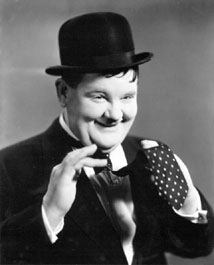
In the Night Kitchen revolves around Mickey, a little boy who hears noises and orders them downstairs to quiet down. Before he knows it, he floats downwards, losing his pajamas and lands in the night kitchen. There, three identical chefs, all who look like Oliver Hardy, apparently mistake Mickey for milk and stir him into the morning cake. Just before they put him in the over, Mickey pops out and says he's not the milk and the milk's not in him.
Now wearing the batter, he makes a plane out of dough and flies over the Milky Way (a large bottle of milk), where he dives in and pours out the milk for the Hardy Trio's cake (again, losing his covering and appearing nude). Job done, he shouts out "Cock-a-Doodle-Doo" and floats back up to his bed, with the ending noting that thanks to Mickey, we have cake every morning.
What freaks people out about In the Night Kitchen is the full-frontal nudity of Mickey, who is around five in my estimation. This child is naked twice in the book, and it isn't just that Mickey's nude. It's that we can clearly see his genitals. The sight of a nude child concerns many parents, who fear that this might be offensive, even pornographic.
I can only judge from my own perspective, but I don't see why parents or any other adult would be so horrified at the drawings.
This does not go up to the level of child pornography in any way, shape or form. Child pornography is when one gets sexual pleasure or gratification from images of or actual intercourse with children. In the Night Kitchen does not, to my mind, come close to having been created for such a purpose.
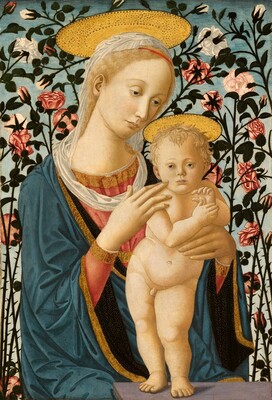
From my view, the illustrations of nudity are innocuous and inoffensive. There have been nude children in art before: primarily images of the Christ Child with Mary where He is undressed, or when we see mythological creatures like Cupid or cherubs who are similarly undressed.
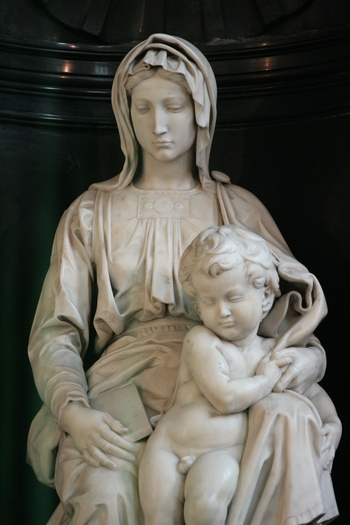
For me, this is a case of the adults putting in their own perspectives, good or bad, into a children's book. I'm pretty strict about nudity and anything I might think is untoward or indecent, but given that the audience for In the Night Kitchen is children, I don't think many children will even really care. Boys know what they look like, and maybe girls will ask about what Mickey looks like, but a straightforward "that's what makes a boy a boy" I figure would work.
Ultimately, when it comes to Mickey's nudity, I think it is a case of they read too much into things.
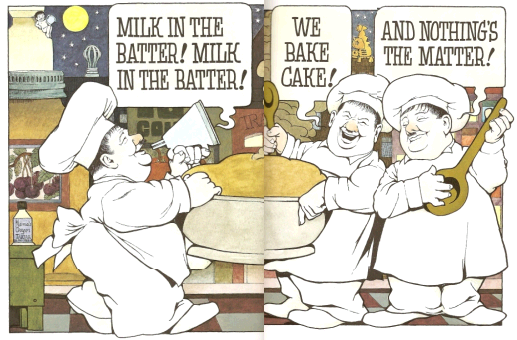
In the Night Kitchen is beautifully illustrated, rich in detail and pleasant to the eye. Having said that, I thought it wasn't a particularly interesting story. A somewhat bossy child (he does yell at the beginning) dreams he falls into a special kitchen where cake that is served in the morning is made (with him almost in it) and he pours the milk.
I'm trying to think if I were a child, would I really care all that much about the story itself. I don't think I would. I'd love the illustrations, so full of fun and life and whimsy, but for the story? I know it was all a dream, but why would I care how cake for breakfast was made?
I don't even remember having cake for breakfast, at least on a regular basis.
With regards to the reason In the Night Kitchen is often challenged or banned (Mickey's nudity), I still hold that people read too much into it and put their own ideas about decency into it. It's a little boy, and while perhaps Sendak could have illustrated it in such as way as to hide Mickey's penis, he opted not to. I'm not going to begrudge him his artistic choice but I'm not going to label him a pervert either.
I do wonder whether the fact Sendak was openly gay might be behind these allegations of indecency. Gay man, nude boys: too many people reading too much into too little.
It is up to parents to decide what is and isn't appropriate for their children, not other adults either librarians or 'concerned adults'. It isn't pornographic or meant for arousal. In the Night Kitchen is really about the beautiful art within it. I just thought the story was dull, though it might entertain a very small child.
I would not ban or censor In the Night Kitchen, finding it much ado about nothing. I'd have no problem letting my children read it. I doubt however, it would be of much interest to them.
Thursday, February 5, 2015
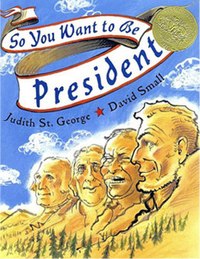
Module 3--So You Want to Be President? A Review
MODULE 3:
SO YOU WANT TO BE PRESIDENT?
By Judith St. George,
Illustrated by David Small
St. George, J. (2000). So You Want to Be President?. New York, Philomel Books.
Curiously, like another Caldecott winner (From Ashanti to Zulu), So You Want to Be President? is an educational book. However, unlike the elegant and more serious From Ashanti to Zulu, So You Want to Be President? takes a more light-hearted take on the Chief Executive, one that relates to children's lives while showing the variety of Presidents.
It covers facts about the Presidents with a wry sense of humor. For example, it asks if the reader was born in a log cabin. It adds that since it's not likely that they were, it's "too bad" because "people are crazy about log-cabin Presidents", pointing out that eight Presidents were born in log cabins. It also points out that one President, William Harrison, made a log cabin part of his persona despite being born in a Virginia mansion.
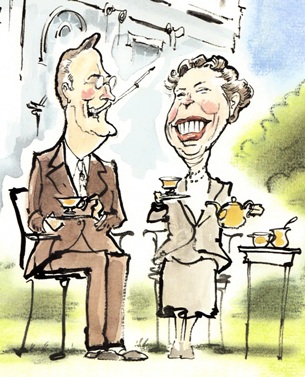
So You Want to Be President? also shows some of the perks of the Presidency, again in a humorous way. It mentions that the President has a swimming pool, bowling alley, and movie theater. "The President never has to take out the garbage", the book adds. To underscore the bowling alley, the illustration is that of President Richard Nixon leaping for joy (complete with his "V for Victory" sign) when he has a strike, with two background figures politely applauding while one gets his own bowling ball ready. For those who don't recognize the figures, the end of the book has their names: Pat Nixon, Henry Kissinger, and Gerald Ford.
However, the book points out that it's not all roses at the top. "The President has to be polite to everyone. The President can't go anywhere alone. The President has lots of homework."
The information is highly interesting, informative, even amusing. The infamous Taft bathtub gets a mention, where President Taft was so heavy (over three hundred pounds) that he had to have a special bathtub made (one that could fit four regular-sized men). This is underscored with a hilarious illustration of the President, chicken leg in one hand, champagne glass in the other, being lowered into the tub by a construction crane. When it discusses the various jobs the President has had prior to his election, again it takes an education and humorous tone.
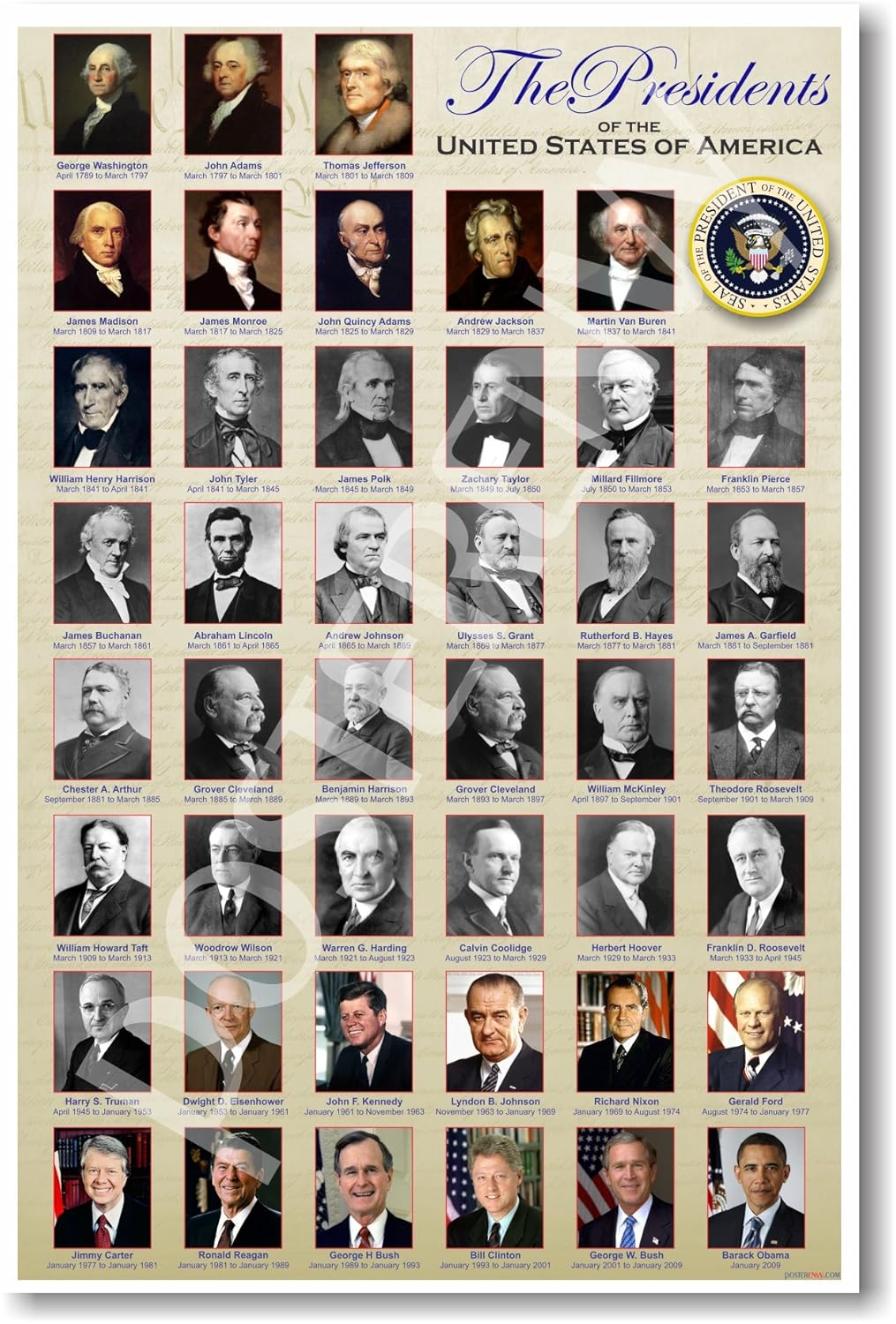
So You Want to Be President? mentions that Harry Truman ran a men's clothing store, Andrew Johnson was a tailor, and Ronald Reagan was a movie star. To illustrate this (no pun intended), we see a caricature of President Truman at the register, while President Reagan gets measured for a suit by President Johnson. Yes, it is historically inaccurate to show all three of them as contemporaries, but I think it shows that the book is not taking itself seriously.
We get a wide variety of information both amusing (such as when President John Quincy Adams had his clothes taken while skinny-dipping) and interesting (like President Andrew Johnson, who could not read until he was fourteen). It handles this information beautifully by having the illustration show the future President with a chalkboard in his hand writing out his ABCs.
It also handles the less savory aspects of the Presidency in a clever and intelligent way. "One thing is certain, if you want to be President--and stay President--be honest." Here, it discusses the resignation of President Nixon and the impeachment of President Clinton by illustrating both Presidents walking with heads bowed away from the Lincoln Memorial in shades of grey, evoking both dusk and the darkness of the scandals.
For the most part though, So You Want to Be President? takes a really fun and lighthearted view of the Presidency while providing information children will find interesting (and secretly informative). The illustrations are in a similar vein: cute and amusing. Pointing out the various musical talents of previous Presidents, we see a 'band' of Presidents with Chester A. Arthur playing the banjo as Presidents Truman and Nixon share a piano. We even see the normally stale President Woodrow Wilson cut a mean rug when we read he enjoyed doing the jig.
As this book was originally published in 2000, So You Want to Be President? will need constant updating. The book ends with the mention that no woman or 'person of color' has been President, and it shows this by showing a black man and Geraldine Ferraro roped off from a gathering of Presidents. An updated edition will now mention the first black President, Barack Obama, and in 2017 should she be elected, it will mention President Hillary Clinton.
I think children will find So You Want to Be President? lighthearted, amusing, and a great resource should they want to write a paper on the Presidency or a particular President.
BRIEF REVIEW DISCUSSION
This pleasant tone is echoed by New York Times reviewer Steven R. Weisman, who commented about So You Want to Be President? that "it takes the reader on a chatty tour, introducing characteristics of all 41 chief executives from a child's point of view." Weisman goes on to add that while children may find it easy to read, it might be better to have the child read it with an adult. I think Weisman's suggestion is a good one. While the tone is pretty upbeat, there are moments in So You Want to be President? that would lead to good discussions about politics, about morality, about work. Yes, the President has a lot of perks, but he or she has a lot of responsibilities. A book like this would be a good way to teach kids about things like responsibilities and duties. Not to suggest the book or instructions have to be boring. The book itself is quite cheery, and any lessons could be done in that style.
PROGRAMMING SUGGESTIONS
As I think on potential uses for So You Want to Be President?, the best times would be during President's Day or an upcoming election. You might have children set up 'voting booths' where they can ask patrons to vote on a completely non-controversial topic (Disneyland vs. Disney World, Katniss vs. Tris, Hogwarts' Class President: Harry Potter, Ron Weasley, Hermione Granger, Draco Malfoy, Neville Longbottom, Luna Lovegood). An activity where they can build a log cabin or a scavenger hunt where you place Presidential portraits around the library in exchange for either a small prize or a copy of So You Want to Be President? are also some ideas.
REFERENCE:
Weisman, S. (2000, September 17). Children's Books: So You Want to Be President?, New York Times. Retrieved from https://www.nytimes.com/books/00/09/17/reviews/000917.rv110429.html
| Judith St. George Born 1939 |
Wednesday, February 4, 2015
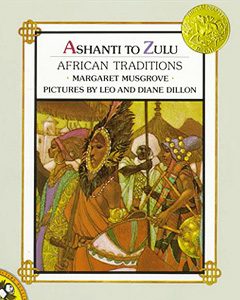
Module 3--Ashanti to Zulu: African Traditions. A Review
MODULE 3:
ASHANTI TO ZULU:
AFRICAN TRADITIONS
by Margaret Musgrove,
Illustrations by Leo and Diane Dillon
Musgrove, M. (1976). Ashanti to Zulu: African Traditions. New York: Dial Books for Young Readers.
Ashanti to Zulu is an interesting book in that it doesn't tell a story but instead is educational while simultaneously being highly entertaining. It goes through every letter of the alphabet to give brief information of twenty-six distinct African people. Each ethnic group is illustrated with figures that show them in traditional dress.
Each blurb has the group's name provided with the phonetic pronunciation. For example, the Quimbande have next to their name this: (keem-bahn-deh). Each section tells something unique about the group. For example, the Quimbande believe in polygamy, where "children can have as many as twenty-five brothers and sisters if their father can afford them". The Tuareg (twah-reg) people, for their part, have the men wear veils while the women, unveiled, are the more verbal of the two with the men sitting quietly as the women converse.In terms of story, there is none. Nothing ties one ethnic group to the other. They never meet and they are so varied that the Masai and the Xhosa would not sense a similarity in their worlds. Instead, Ashanti to Zulu gives us a fascinating look into the variety of African cultures. From Ashanti to Zulu instead has as its purpose to give information on each group, which while brief is still highly interesting. Some, like the Baulle, give us a legend about the group (how they were saved from the enemy by crocodiles in exchange for their most precious object, which in this case was the queen's only son. Others, like the Lozi, as a people move to higher ground when the Zambezi River floods; the Royal Ship called the Nalikwanda leads all other ships that contain not just the people but stoves and even cows.
Ashanti to Zulu I think makes learning about the various peoples of Africa interesting due to the brevity of the text for each group as well as due to the beautiful illustrations. The Dillons add rich details to each drawings. For example, the desert people's illustrations are dominated by shades of yellow to reflect their world. Those in the more lush parts are more green.
Granted, Ashanti to Zulu is more educational than entertaining, which makes it a rarity among Caldecott winners in that it doesn't tell a specific story. A child, though, I believe will find it interesting not just because we see a wide variety of African people but because the illustrations are so well-done and because the information is brief.
BRIEF REVIEW DISCUSSION
The Kirkus Review was quite harsh on Ashanti to Zulu. "This prescribed format gives a superficial air of sameness to the pictures even though the Dillons are careful to depict differences in headdress, dwelling structure, etc., and it gives the pages a static, stilted look which the illustrators do nothing to allay." I can see the review has a point: there is no variation to the style both in text and illustrations (though the illustrations are very lavish). I don't think, thought, that Ashanti to Zulu that it was meant to be a deep exploration of various African cultures. I think the reviewer missed the points of Ashanti to Zulu: to serve as an unofficial introduction to the alphabet (in the same way A is for Apple, or A is for A if you're an Ayn Rand follower), and as a primer on the distinct African cultures. Ashanti to Zulu is meant to just touch on the cultures, presenting tidbits to young readers and give them beautiful illustrations to look at. I think the illustrations bring elegance and dignity to their subjects (which I think most fitting). I also think children, at this stage, welcome repetition. It creates a steady pace that they can follow without worrying about change. In that respect, Ashanti to Zulu is a great success, one that I would happily read to my child.
PROGRAMMING IDEAS
A wonderful opportunity to use Ashanti to Zulu would be during any Black History Month presentation. You could offer an African face mask competition/program, invite African dance troupes (if available) to perform, or invite children to create their own stories around one of the 26 nations presented in the book. You may even have a storyteller present traditional African tales to children or adults.
REFERENCES:
Book Review: Ashanti to Zulu: African Traditions by Margaret Musgrove. Kirkus Reviews. Retrieved from https://www.kirkusreviews.com/book-reviews/margaret-musgrove-2/ashanti-to-zulu-african-traditions/
Subscribe to:
Posts (Atom)