Showing posts with label Children's Books. Show all posts

Sunday, May 14, 2017

In the Night Kitchen: A Review


Sendak, M. (1970) In the Night Kitchen. Harper Collins.

Maurice Sendak opened a lot of controversy with his children's book, In the Night Kitchen.  The small book finds itself often challenged or banned from libraries.  I had not read In the Night Kitchen as a child so I did not know anything about it.  Now having read it, I don't know what the fuss is all about, both in regards to the controversy and to the praise it has received.

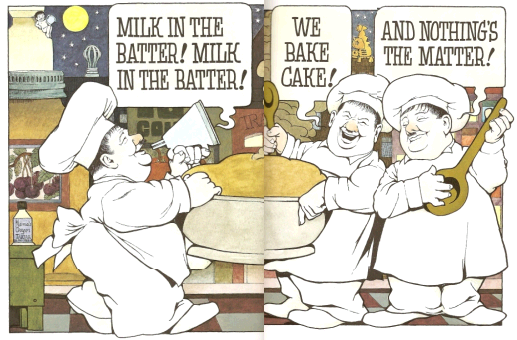
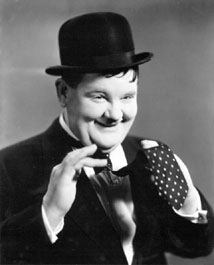
In the Night Kitchen revolves around Mickey, a little boy who hears noises and orders them downstairs to quiet down.  Before he knows it, he floats downwards, losing his pajamas and lands in the night kitchen.  There, three identical chefs, all who look like Oliver Hardy, apparently mistake Mickey for milk and stir him into the morning cake.  Just before they put him in the over, Mickey pops out and says he's not the milk and the milk's not in him. 

Now wearing the batter, he makes a plane out of dough and flies over the Milky Way (a large bottle of milk), where he dives in and pours out the milk for the Hardy Trio's cake (again, losing his covering and appearing nude).  Job done, he shouts out "Cock-a-Doodle-Doo" and floats back up to his bed, with the ending noting that thanks to Mickey, we have cake every morning.


What freaks people out about In the Night Kitchen is the full-frontal nudity of Mickey, who is around five in my estimation.  This child is naked twice in the book, and it isn't just that Mickey's nude.  It's that we can clearly see his genitals.  The sight of a nude child concerns many parents, who fear that this might be offensive, even pornographic.

I can only judge from my own perspective, but I don't see why parents or any other adult would be so horrified at the drawings.

This does not go up to the level of child pornography in any way, shape or form.  Child pornography is when one gets sexual pleasure or gratification from images of or actual intercourse with children.  In the Night Kitchen does not, to my mind, come close to having been created for such a purpose.


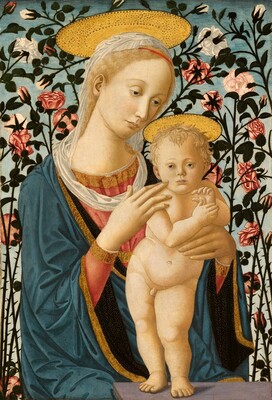
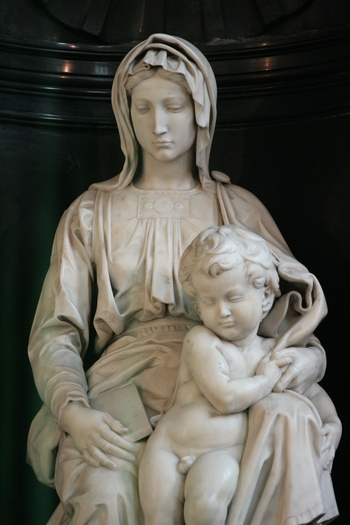
From my view, the illustrations of nudity are innocuous and inoffensive.  There have been nude children in art before: primarily images of the Christ Child with Mary where He is undressed, or when we see mythological creatures like Cupid or cherubs who are similarly undressed.


For me, this is a case of the adults putting in their own perspectives, good or bad, into a children's book.  I'm pretty strict about nudity and anything I might think is untoward or indecent, but given that the audience for In the Night Kitchen is children, I don't think many children will even really care.  Boys know what they look like, and maybe girls will ask about what Mickey looks like, but a straightforward "that's what makes a boy a boy" I figure would work.

Ultimately, when it comes to Mickey's nudity, I think it is a case of they read too much into things.


In the Night Kitchen is beautifully illustrated, rich in detail and pleasant to the eye.  Having said that, I thought it wasn't a particularly interesting story.  A somewhat bossy child (he does yell at the beginning) dreams he falls into a special kitchen where cake that is served in the morning is made (with him almost in it) and he pours the milk.

I'm trying to think if I were a child, would I really care all that much about the story itself.  I don't think I would.  I'd love the illustrations, so full of fun and life and whimsy, but for the story?  I know it was all a dream, but why would I care how cake for breakfast was made?

I don't even remember having cake for breakfast, at least on a regular basis.

With regards to the reason In the Night Kitchen is often challenged or banned (Mickey's nudity), I still hold that people read too much into it and put their own ideas about decency into it.  It's a little boy, and while perhaps Sendak could have illustrated it in such as way as to hide Mickey's penis, he opted not to.  I'm not going to begrudge him his artistic choice but I'm not going to label him a pervert either.

I do wonder whether the fact Sendak was openly gay might be behind these allegations of indecency. Gay man, nude boys: too many people reading too much into too little.

It is up to parents to decide what is and isn't appropriate for their children, not other adults either librarians or 'concerned adults'.  It isn't pornographic or meant for arousal.  In the Night Kitchen is really about the beautiful art within it.  I just thought the story was dull, though it might entertain a very small child.

I would not ban or censor In the Night Kitchen, finding it much ado about nothing.  I'd have no problem letting my children read it.  I doubt however, it would be of much interest to them.

Wednesday, May 6, 2015

Module 15--Daddy's Roommate: A Review


DADDY'S ROOMMATE by Michael Willhoite

Willhoite, M. (1991) Daddy's Roommate.  Alyson Book, New York.

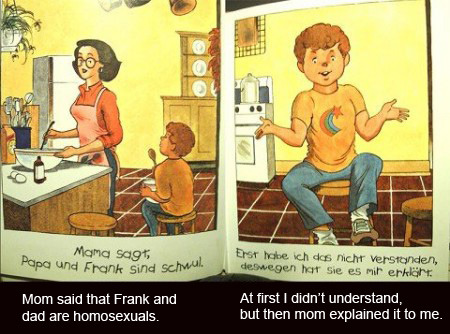
Daddy's Roommate, almost fifteen years after publication, is still a source of controversy.  It is listed by the American Library Association as the second most challenged book between 1990 and 1991.  Despite all the gains of gays in America (including the eventual legalization of same-sex marriage throughout the country), the issue of homosexual relations is still touchy to a segment of the population.  The rightness or wrongness of a homosexual relationship is not the subject of Daddy's Roommate.  It is instead about one child's-eye view of the circumstances he finds himself in.

Told in a first-person voice, the boy (never named) tells us about his father (also never named, but simply referred to as "Daddy").  Mommy and Daddy got a divorce 'last year' The Boy tells us, and now Daddy is living with his 'roommate', Frank (oddly, despite being the title character, he's the only person who gets a name in Daddy's Roommate).  Daddy and Frank do all sorts of things together: work, eat. sleep, shave, and even fight together (but always make up).  Frank, The Boy reports, likes him, and Frank and The Boy spend time together (Frank reads to The Boy and makes "great peanut butter and jelly sandwiches", emphasis the book's).  On weekends, the three of them (Frank, The Boy, and Daddy) do all sorts of things together: go to baseball games, the zoo, the beach, work in the yard, and have sing-alongs by the piano.  Mommy tells The Boy that Daddy and Frank are gay.

"At first I didn't know what that meant.  So she explained it.  Being gay is just one more kind of love.  And love is the best kind of happiness.  Daddy and his roommate are very happy together.  And I'm happy too!"


While reading Daddy's Roommate, I played around with it.  I substituted Frank for Francine, and thought what if Daddy's roommate were a woman.  The mind boggles at the idea of Francine and Daddy 'shaving together', but apart from that, would it make much difference if Daddy's roommate were a woman?  I think yes, but perhaps not in the way people might imagine.

The connotation between a male-female living arrangement and a male-male living arrangement like the one presented in Daddy's Roommate surprisingly leaves much ambiguity in the latter.  I think children have a basic understanding that when a man and a woman sleep together, they know it involves something akin to romance.  When it comes to a man and a man (or a woman and a woman) sleeping together, not so much.  Personally, I think we give children far too much credit if we imagine that they automatically know that homosexual love is the same as heterosexual love.

If it were Francine and Daddy rather than Frank and Daddy in Daddy's Roommate, I think children would more quickly and easily grasp that the new relationship is a romantic one.   The way Frank and Daddy's relationship comes across, there isn't what I would call 'romance', just good buddies living together.  It's almost as if Willhoite, for all his intents, wanted to make a same-sex relationship palatable and understandable to elementary school children but instead almost hid the true nature and depth of the relationship.

The imagery of Daddy and Frank in Daddy's Roommate is to my mind almost comical in how innocuous it is.  Looking at the illustrations and text, what I saw in the relationship between Daddy and Frank was not romance, but just a very good friendship.  Apart from the next-to-last panel, where Frank and Daddy were watching television together, with Frank's arm over Daddy's shoulder in what is an intimate gesture, I have done pretty much everything Daddy and Frank did with my best friend.

Yes, I've even slept with my best friend (who is a man), if by 'sleeping' you mean 'shared the same bed'.  If by 'sleeping' you mean 'have sex', then no, I haven't 'slept' with my best friend.  Granted, I also haven't put lotion on his back at the beach, but minus that pretty much the relationship between Daddy and Frank is the same as mine with my best friend.  A child of a gay father who has come out (especially to his son) would understand what was going on in Daddy's Roommate.  A child of either a closeted gay father or a heterosexual father I think wouldn't get it, or get it so quickly. 

It does make me wonder who Willhoite's target audience is.  If he wrote Daddy's Roommate for children of gay fathers, more power to him.  If he wrote it for a more general audience, I think he missed the mark.


One aspect of Daddy's Roommate that I could never shake was just how easily everyone accepted things.  Despite being the primary guardian (The Boy mentions that he sees Daddy on weekend), Mommy has virtually nothing to do with The Boy apart from telling him Daddy and Frank are gay and that it's "just one more kind of love".  That may be true, but for myself I found the idea of an ex-spouse who took all this in stride extremely bizarre.  Here she was, marrying a man she loved, having a child with him, only to divorce due to her husband's homosexuality.

At least, I figure this was the reason for the divorce.  Whether he or she initiated it there's no way of knowing.  In any case, after what is suppose to be a mere year later, Mommy seems rather cool with the idea that her ex is now with Frank.  Maybe it's just the circle I roll with, but I've never met any divorcee, man or woman, who a mere year later was thrilled to see his/her ex with anyone new, let alone someone of the same gender.  It could also be the excessively detailed person in me, but I kept wondering about Mommy.  Has she found someone new?  How can she be so accepting of her ex-husband's new relationship regardless of gender? Yes, I figure there are many people who do accept the failure of their marriage due to their ex's acceptance of their sexuality, and even some that are happy for their exes.  However, for there not to be any sense of resentment, of regret, of sorrow, just doesn't ring true.

I also thought the same of The Boy.  Willhoite presents an idealized version of reality.  A divorce can be traumatic to a child.  A new stepparent can be difficult for a child.  Throw in that his new stepmother is a man and The Boy's casual acceptance of this again doesn't ring completely true.  Willhoite won't acknowledge that these changes may be difficult for a child.  He won't acknowledge that a child may not think it's Same Love as Macklemore thinks.  Rather than recognize that a child may find all or any of this hard to take (the divorce, the new relationship, the same-sex nature of the new relationship), or even entertain the idea that a child may not be happy about anything involving this not related to sexuality, Willhoite's Boy seems rather nonchalant.  Daddy loved a woman, now he loves a man, OK.  Yes, some children can take this easily, but some children cannot. 

Daddy's Roommate could have been a great book about helping kids deal or accept their father's new same-sex partner.  It could have helped children by guiding them through what could be traumatic experiences (divorce, a new partner for his/her father).  Instead, Daddy's Roommate idealizes what, regardless of sexual orientation, can be a difficult situation.  Divorce is hard on children, no matter what the circumstances.  How all the adults in Daddy's Roommate appear so casual about everything to me suggests that in this world, a child's questions about the various changes can be answered with a rather pat answer: "it's just one more kind of love."  That may be true, but even today, when seven-year-olds can be certain they are transgender (and as a side note, I admit that at age seven, I had no concept of transgender or any kind of sexual identity as straight or gay, only the difference in boys and girls), I think Daddy's Roommate is a little disingenuous.

Maybe Tolstoy is right.  Maybe ALL happy families are alike. 

Would I ban Daddy's Roommate?  ABSOLUTELY NOT!  I'm someone who loathes censorship and would not ban something unless it called for violence or was a deliberately racist/sexist/homophobic work (books that denied the Holocaust or supported ISIS for example).  I however, think the nonfiction section is the most appropriate area for Daddy's Roommate.  If it were placed in the Easy section, it would lead to a lot of questions that parents may not want to answer or have asked, because I think that the world outside Daddy's Roommate is more complicated than the one Willhoite created.

I personally don't find much to object to in Daddy's Roommate (apart from its rather simplistic text and view of the world).  I would carry it in the system, because same-sex partnerships are a real part of life.

BRIEF REVIEW DISCUSSION

As if that weren't enough, I think the Entertainment Weekly review of Daddy's Roommate, which earned a C+, is pretty accurate and one I agree with. 

The books’ clear goal is to show homosexual relationships as a real-world complement to the mom-and-dad model. Unfortunately, Daddy’s Roommate suffers from the same failing as the old Dick-and-Jane books: It’s so relentlessly blithe that it could almost be called Dick and Dick. As if divorce or re-coupling — especially when gay partners are involved — were ever so untroubled.  

I don't think Michelle Landsberg realized the unintentional double entendre of Dick and Dick with regards to Daddy's Roommate.  It's a little reminiscent of when ESPN's Anthony Federico used the term 'chink in the armor' to refer to Jeremy Lin's role in the New York Knick's loss at a game.  I believe Federico's version, that he was not aware that 'chink' was a racial slur regarding Chinese (I for one had never heard that slur used regarding Asians) and the term 'chink in the armor' is a common one.  Similarly, the Dick and Dick comment I think was not intended as anything other than a joke, not a bizarre comment on the subject matter.

I found the text rather simplistic, which is perfect for the target audience (very small children), though perhaps a bit too simplistic, even a bit condescending, to where it might be a bit boring for children (the Dick-and-Jane style being the best description for it).

PROGRAMMING IDEAS

This one is the hardest for me, because Daddy's Roommate-related programs will in my view inevitably bring confrontation between groups.  Pro-gay groups are not immune from being as vitriolic and confrontational as their counterparts.  I would suggest a Family Day celebration where all families are welcome and leave it as that.        


Michael Willhoite
Born 1946
REFERENCES:

Landsberg, M. (2015, January 17). Daddy's Roommate.  Entertainment Weekly. Retrieved from http://www.ew.com/article/1993/01/29/daddys-roommate

Sunday, April 19, 2015

Module 12--Bill the Boy Wonder: The Secret Co-Creator of Batman: A Review


MODULE 12:
BILL THE BOY WONDER:
THE SECRET CO-CREATOR OF BATMAN:
by Marc Tyler Nobleman, illustrated by Ty Templeton

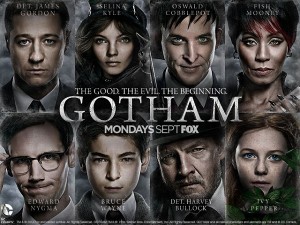
I feel the need to start with full disclosure.  I'm not into comic books.  Basically, my whole knowledge of figures like Superman, Batman, and Spider-Man (among others) comes from the film and television adaptations.  Currently, the Batman television prequel Gotham is not just a hit, but is among one of my favorite television shows. Through the campy 1960s television show, the Tim Burton/Joel Schumacher films, the Christopher Nolan Dark Knight trilogy, up to Gotham, I took it as fact that Bob Kane had created Batman out of whole cloth on his own.  Bill the Boy Wonder: The Secret Co-Creator of Batman brings us some shocking news: Kane was not alone.  Bill Finger, whom Kane has admitted was integral to the creation of this iconic figure, remains virtually unknown, even to Batman fans.  Marc Tyler Nobleman and Ty Templeton's book not only sets the record straight, but gives this hidden figure his due in a book I think Finger would be proud of. 

Milton Finger wanted a job, but in the Depression, his Jewish background (and first name) would probably keep him out of work.  He turned Milton into the more American "Bill", but work was still hard to come by.  He dreamed of being an artist and writer, but could only find work as a shoe salesman.  A chance encounter with another cartoonist, Bob Kane, soon started them on collaborating.  Inspired by the success of Superman, they worked to create another equally successful character.  Their character was different than the popular ones of the day. He would be a vigilante, human, with no superpowers.  Kane took the idea to their publisher, who liked it.  Finger agreed to write Batman stories without credit (a typical arrangement at the time).  Kane also hired other artists to serve as illustrators and ghostwriters, including one named Jerry Robinson.

Bob Kane
1915-1998

Finger not only wrote many Batman stories, but came up with much of the Batman mythos: his origin story of young Bruce Wayne, whose wealthy parents were murdered, Wayne's hometown of Gotham, the Batcave and Batmobile.  Finger also created the young Dick Grayson, the first Robin, and villains such as The Penguin and The Riddler.  Finger would jot down tidbits in a journal, using them for ideas, but was happy to share these notebooks with other writers.  In time, he married a woman named Portia, had only one son named Fred, and kept working on Batman.    That changed in 1964, when comics editor Julius Schwartz started talking openly about Finger's contributions.  Jerry Bails, a Batman fan, began investigating and interviewing Finger, publishing an article giving Finger co-credit.  Kane did not take this kindly, but neither Kane or Finger pushed on the issue of credit. 

On Friday, January 18, 1974, Bill Finger died.  Fred Finger scattered his ashes in the sea, but not before placing them in a Bat-Sign he made on the beach.  After Finger's death, Kane gave Finger credit...with his words, but never asked that he be given credit in print.  "But Bob didn't amend the part of his contract requiring that he always be listed as the sole creator of Batman", the book notes.  However, Finger's old protégé Jerry Robinson kept Bill Finger's legacy alive with the creation of the Bill Finger Awards for Excellence in Comic Book Writing. 


Bill the Boy Wonder is a fascinating portrait of a hidden figure to most if not almost all Batman fans.  Finger comes across as a pretty affable guy, perhaps too affable.  His lack of insistence in not asking for co-credit for creating one of the most iconic comic-book figures is puzzling to say the least.  With the success of Batman in various serials and the 1960s camp Batman show, Finger had plenty of time and opportunities to lay down the law if he so wished.  He had a strong case, but Finger never pushed or insisted on credit.  This despite the fact that Finger's contributions to the Batman storyline was an open secret among their colleagues.  Kane himself talked about how Finger did much to shape Batman to the figure we know him today, but just as Kane never pushed for Finger to get recognition, neither did Finger.

From Kane's perspective, it is understandable.  Batman is a major franchise that is still popular today.  From Finger's perspective, it is still puzzling.  Did Finger simply not care?  Did he think it wasn't worth the trouble to get a byline?  Did he think the work was reward enough? Bill the Boy Wonder never answers that question, I think because there is no answer possible.  Finger has been dead for forty years, as is his son Fred.  Bill Finger is so mysterious a figure that the book notes that the author was able to find only one known note in Finger's handwriting, and that was from around 1942. 


However, the book itself makes for a fascinating read.  The Author's Note which details more information about Finger as well as Nobleman's search for information is in itself fascinating read.  We learn that few pictures of Bill Finger exist, and that the search was drawing blanks because he had changed his name from Milton.  We also learn a far stranger story about what happened after Finger's death. 

His son Fred was gay, so it was believed Finger had no heir.  Fred Finger's belongings were given to a Charles Shaheen.  Shaheen had been receiving small royalty checks from DC Comics and it was thought the checks ended after Shaheen's own death.  However, DC Comics had been sending those royalties to a Jesse Maloney, a drifter.  In the course of Nobleman's investigation he discovered Finger's niece and nephew, who asked him why he didn't talk to Finger's granddaughter.  The fact that Finger had a grandchild was stunning given Fred Finger's open homosexuality, but Nobleman learned that Fred had been married briefly to a woman and had a daughter named Athena.  Athena was tracked down through MySpace, where she shared that her dog's name was Bruce Wayne.

Athena filled in the missing pieces.  Charles Shaheen had been her father's long-time partner, but the family didn't like Shaheen.  Maloney had claimed to be Fred Finger's brother (though Maloney's relationship to Shaheen, whether it was romantic or not, is not known).  Once Maloney was unmasked (no pun intended), DC began sending all of Bill Finger's royalties to Athena, which helped in raising her own son, Bill Finger's great-grandson and final heir. 

I imagine even Commissioner James Gordon would find this tale extremely bizarre.

Ty Templeton's illustrations capture the look of comic books, with their panels and split images.  A few illustrations, like the Wayne murders and the various figures Finger either created or co-created (such as Robin, The Joker, Catwoman, The Penguin and The Riddler) are so evocative of Kane's illustrations (no one disputes Kane did artwork for Batman, though he himself did not write the stories).  They are beautifully rendered.  A particularly poignant moment is when Fred Finger places his late father's ashes on the beach, having shaped the sand into a Bat shape.  "The tide crept in and swept them out to sea," the box says.  It's a beautiful moment.

From the serials to Gotham, all Batman fans bow in salute.

BRIEF REVIEW DISCUSSION

In the Kirkus Review of Bill the Boy Wonder, Nobleman gets enormous credit for the amount of research that went into rescuing this figure from near-oblivion.  Certainly Athena Finger is grateful for Nobleman's research, and not just in financial terms.  The grandfather she never knew (Bill Finger having died two years before her birth) is now assured of the legacy that came too late for him.  We now have the story of Bill Finger, the man who made Batman the man he is today.

PROGRAMMING SUGGESTIONS

I think there are a few good programs that can come from this.  One is to put Bob Kane "on trial" and discuss the ethics of crediting someone for their work (remembering that Finger never pushed or insisted on credit).  A comic-con is also plausible, as is a comic-book creation contest...with winners getting full credit.  A Batman exhibition, where we see the evolution of the character, is also worth considering.


Bill Finger
1914-1974

REFERENCE:

Book Review: Bill the Boy Wonder: The Secret Co-Creator of Batman by Marc Tyler Nobleman (2012, April).  Kirkus Reviews.  Retrieved from https://www.kirkusreviews.com/book-reviews/marc-tyler-nobleman/bill-boy-wonder/

Sunday, April 12, 2015

Module 11--Ballet For Martha: Making Appalachian Spring: A Review


MODULE 11:
BALLET FOR MARTHA:
MAKING APPALACHIAN SPRING:
by Jan Greenberg and Sandra Jordan, illustrated by Brian Floca

Greenberg, J. and Jordan, S. (2010).  Ballet for Martha: Making Appalachian Spring. Roaring Book Press, New York. 

I figure making a book about the creation of an iconic American ballet is a tough sell.  You've got to be true to history and you have two subjects that don't lend themselves naturally to the written word: the art of dance and the art of music.  Ballet for Martha: Making Appalachian Spring, does this efficiently, with beautiful illustrations and great text that together flow as easily and excellently as Aaron Copland's score and Martha Graham's choreography. 

Martha Graham:
1894-1991
We get a quick introduction to our three figures: Martha Graham, the choreographer (or creator of dance), Aaron Copland, the composer, and a generally unsung figure in the creation of the ballet Appalachian Spring, Isamu Noguchi, the artist (in this case, set designer). 

Each figure goes through a creative process and progress.  For Graham, it is coming up with both a scenario and with the dance movements.  She has to create a story that can be told in dance, and that can be both creative and one that can be performed by the dancers.  It isn't easy, as she keeps working and reworking her choreography.  Graham also has the added burden of finding her style not embraced by the times.

Aaron Copland
1900-1990
For Copland, it is in finding the right music to which to tell the story he's been given: a pioneer wedding.  He comes across a Shaker hymn, which inspires him.  He writes out the music, waits for it to be approved, and even doesn't mind when the score is rearranged to fit the dance.  For Noguchi, it is going beyond his usual sculptures and creating a minimalist set that can work with the dancers and their movements.

Finally, the big day comes: October 30, 1944, where Appalachian Spring (a title Graham found in a poem and which she liked despite having nothing to do with the ballet) premieres in Washington, D.C. at the Library of Congress.  Ballet for Martha then describes through words and illustrations the ballet itself and the great success Appalachian Spring had.  The book ends with the idea of a revival of Appalachian Spring, with new dancers coming to recreate this uniquely American story.  We know that it is a new interpretation, for we see a multicultural dance company performing the dance.  We also get a "Curtain Call" section, giving brief biographies of Graham, Copland, and Noguchi and the footnotes that credit the information.

Isamu Noguchi:
1904-1988
 
Ballet for Martha as I said has a very difficult task.  How exactly does one recreate on a page the freedom of movement or the sound of music?  Appalachian Spring is one of the seminal works of American culture: Copland's score, in particular his interpretation of the Shaker hymn Simple Gifts is among the greatest and most recognizable works in American music.  The choreography to Appalachian Spring was a landmark in American dance.  Therefore, how to show this physical work in a book?


A great deal of success to Ballet for Martha is due to Floca's illustrations.  They are simple but elegant.  In particular, Floca has a vitality when illustrating the leaping and movements of various dances.  We don't just see the illustrations to show how Appalachian Spring was, but also a previous Graham ballet, 1929's Heretic.  We don't get a description of what Heretic is about, but the fact that Floca's illustrations show Graham all in white facing a group of women towering over her all in black is a strong explanation of what Heretic entails.  We see this with Floca's illustration for Appalachian Spring as we see the exuberance and the quiet of the dancing.

Floca throughout Ballet for Martha shows us how the dancers told the story through movement.  The text by Greenberg and Jordan take great care to explain what is going on in the story.  Ballet can be a bit opaque to many people, especially children not involved in ballet.  As such, to see Greenberg and Jordan's text alongside with Floca's illustrations we get as much impact as possible for the page.

"The bridegroom leaps and bounds like an acrobat, strutting, swaggering, showing off for his bride." 


The text above is complimented with illustrations of the various athletic movements of the male lead, concluding with a full-page illustration of the Bridegroom posing in a powerful position, muscular arms thrust out, almost as if he were more prizefighter than ballet dancer.  They do the same when they describe the 'fiery' movements of the Preacher, almost as an avenging angel warning sinners of the wrath of an angry God.

Ballet for Martha also gives us not just the story of the creation of Appalachian Spring, but about the importance of collaboration.  Each figure (Graham, Copland, and Noguchi) worked together to create Appalachian Spring.  We don't read that any of them said it had to be done their way.  In fact, we read that Graham had to rewrite her scenario again and again, and that Copland didn't object when his music was rearranged.  Whether the last part was true is not in the notes, but we trust that if there was, it would have been mentioned.  As it stands, there is no sense that Appalachian Spring was anything other than three great artists collaborating and working in tandem to create a masterpiece.  


Above all else, Appalachian Spring is an AMERICAN creation: a piece that is about an American subject, drawing from American music, infused with the American spirit of freedom.  This is why it was extremely clever to end Ballet for Martha with a whole new group of dancers performing Appalachian Spring, one that featured minorities in the prominent roles.   It shows that dance companies around the world are able to perform Appalachian Spring as a work that celebrates America, or at least acknowledges that the United States has its own unique culture. 

BRIEF REVIEW DISCUSSION

In her review for Ballet for Martha, Jennifer McDonald observed that after reading it, "the book's earnestness may appeal to young dancers (and will undoubtedly send them to YouTube to see "Appalachian Spring" for themselves." I can testify that it wasn't just 'young dancers' who were intrigued to see what Appalachian Spring was all about.   I think readers will want to know more about Appalachian Spring, and fortunately, we have video of the ballet with Graham recreating her original performance. 

PROGRAMMING SUGGESTIONS

Obviously, a performance of a selection from Appalachian Spring would be an excellent program to have for Ballet for Martha.  We could also have either a band perform the score's most famous work, Copland's version of Simple Gifts, or have a choir sing this and other Shaker hymns.    

REFERENCES:

McDonald, J. (2011, January 14). Rhythms of a New Land. The New York Times Book Reviews.  Retrieved from http://www.nytimes.com/2011/01/16/books/review/McDonald-t.html?_r=0

Tuesday, March 31, 2015

The Yellow Star: The Legend of King Christian X: A Review


THE YELLOW STAR: THE LEGEND OF KING CHRISTIAN X OF DENMARK: by Carmen Agra Deedy, Illustrated by Henri Sorensen

Deedy, C. (2000).  The Yellow Star: The Legend of King Christian X of Denmark. Peachtree Publishers, Atlanta.

The Yellow Star has as a subtitle The Legend of King Christian X of Denmark because the story of the Danish King's act of defiance against Nazi tyranny is just that: a legend.  It is a story that has been told often but which has no historic basis.  It's an apocryphal story but despite that, The Yellow Star's purpose was not to be historically accurate in that respect.  The overlying message about the importance of personal courage and the truth about the commonality of individuals is what mattered most.

King Christian X is beloved by the Danes.  He rides on his horse through the streets of the capital, Copenhagen, without armed escort.  This astounds foreigners but they are told that all Danes would guard their monarch. 

However, Denmark has fallen under the Nazi reign of terror.  They first decide to install the Nazi flag above the palace.  His Majesty orders it taken down.  When told by the Nazi official that if any soldier the King sends takes it down, that soldier will be shot, His Majesty replies that they better be prepared to execute King Christian X, for HE will be said soldier. 

The Nazi flag never flew above the palace again.

This is a small victory, but a greater battle is coming.  The Nazis have ordered that all Danish Jews wear the yellow star that distinguishes them from their Gentile neighbors.  The King is worried: he does not want the Jewish Danes marked, but there is no way the Danish Army can take a stand.  While walking on the balcony and observing the stars, an idea comes to him.  Summoning the royal tailor, he instructs him to make a small alteration to the royal uniform.

The next day, His Majesty King Christian X of Denmark takes his daily ride...wearing a yellow Star of David upon his uniform.  The defiant Danes, following His Majesty's example, all wear the yellow star, Jew and Gentile alike.  They are all one people. 


Where I think The Yellow Star kind of missed the mark was at the actual climatic moment: when His Majesty took his traditional morning horse ride through Copenhagen after the edict requiring Jews to wear the Yellow Star.  Here is this great moment, in fact THE moment in The Yellow Star, and illustrator Sorensen all but hides the yellow star on His Majesty's uniform.  Yes, you can see it, but it is almost hidden by the horse's ear.  Furthermore, the King is seen almost at a distance, while his people take a gander at their king and his new threads.

I wonder, was that a deliberate decision on both Sorensen and Deedy's part?  The text itself doesn't specifically state that the King wore a yellow star through the streets of Copenhagen.  It just remarks on his "courage and defiance" and how he was dressed in "his finest clothing".  Maybe the point wasn't to draw attention to it.  Maybe we as the reader are suppose to get just enough information without having it put up front. 

However, since the entire point of The Yellow Star is to discuss the legendary (and in all likelihood, false) story of the King who defied the Nazis, I do wonder why the most pivotal moment in the book was given a bit of a short-shrift.


However, the actual book is quite good.  It is targeted towards children, and it is both respectful of the Holocaust without having to go into detail about the true horror of the Shoah.   We see this when in the story, the Danes are reflecting on the "terrible stories" about Jews in other countries.  It is the only section where instead of vibrant colors, we get sepia tones.  This panel also shows other barbarisms, like Kristallnacht, without making comment on it. 

I think children will draw what information is required (the Jews were brutalized during this time), but the writer and illustrator were right in holding back the more gruesome aspects.  First, such information is really too brutal for children.  Second, the story itself doesn't focus on the Holocaust itself, but on the actions of the Danish people and in particular their King, during the war.

The Yellow Star: The Legend of King Christian X of Denmark, is a well-written story, with simple words that children will understand.  It has some beautiful illustrations and tells its story simply, directly, with just enough detail to trust the reader to understand the wrongness of the Nazi action and the courage of both the Danes and their monarch.   

Carmen Agra Deedy

Saturday, March 28, 2015

Module 9--The Case of the Missing Marquess: An Enola Holmes Mystery: A Review


MODULE 9:
THE CASE OF THE MISSING MARQUESS: AN ENOLA HOLMES MYSTERY
by: Nancy Springer

Springer, N. (2006). The Case of the Missing Marquess: An Enola Holmes Mystery. Philomel Books, New York. 

Sherlock Holmes is a true icon of literature, one of the few fictional characters universally known and recognized.  Since his first story was published, Sherlock Holmes has spun all sorts of fictional works outside Canon (the Sherlock Holmes stories written by Sir Arthur Conan Doyle).   Minor Canon characters like Irene Adler (THE Woman) and Professor Moriarty (one of his greatest foes) have spun off their own adventures. 

There are stories still being written that expand on the Holmes universe.  There are the Mary Russell stories (who went from being Holmes' protégé to his wife), The Final Solution (written by Michael Chabon) and even suggestions that another fictional character (Nero Wolfe) might be Sherlock Holmes' love child (with Irene Adler as the mother).  On television, the character of Holmes is the lead on two successful and acclaimed television series: BBC's Sherlock and CBS' Elementary.  There's also been a pair of successful Sherlock Holmes films with Robert Downey, Jr. and an upcoming film, Mr. Holmes, with Sir Ian McKellen as the Great Detective.

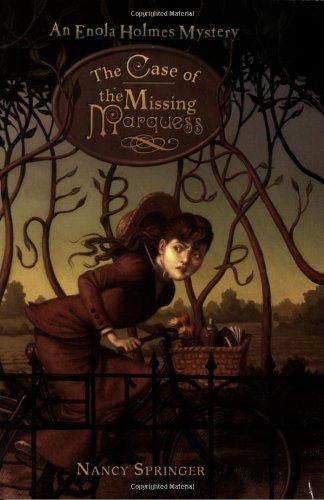
As such, it is not surprising that Conan Doyle's creation entered the children's/young adult book market.  There are the Boy Sherlock Holmes series, the Young Sherlock Holmes series, Sherlock, Lupin, and Me (a series centered around the child adventures of Holmes, Arsene Lupin, and the narrator, Irene Adler), and the book we're reviewing: The Case of the Missing Marquess.  This story is centered around a new character: Enola Holmes, who is the much younger sister of Sherlock and Mycroft Holmes.  The Case of the Missing Marquess is the first of the Enola Holmes stories, a strong debut for a character that is developing into a strong detective in her own right, and one who adds a strong teen's viewpoint to Canon.

Enola Holmes considers herself something of a scandal.  Her mother, Lady Eudoria Vernet Holmes, had her when she was forty, which is proof that Lady Holmes was having sex in later life, which shocks Victorian Britain.  The Widow Holmes and Enola live in Ferndell Hall, which has fallen on some hard times despite the wealth of the legal owner, Mycroft Holmes.  On Enola's fourteenth birthday, Lady Holmes disappears without a trace.  Alarmed, Enola sees no recourse but to contact both her brothers, Mycroft and Sherlock.  They rush to the hall, and are most displeased by everything.  Mycroft discovers that his mother has been misleading him about money, squirreling it away while telling him she needs it for upkeep.  Sherlock finds his mother's disappearance more an irritant, a sign of the mental weakness of the 'fair sex'.  All Enola wants is her mother, and for her brothers to like her.

Mycroft, however, has other ideas.  He's decided that since he's the legal owner of Ferndell Hall, and the head of the family, he has all authority over the sister he's barely acknowledged.  This means putting her in corsets, dressing her like his idea of a proper Victorian lady, and worse, sending her to boarding school.  Enola has loved the freedom she's had at Ferndell Hall, and finds Mycroft's actions intolerable.  As she is sent to a finishing school, complete with corset that constricts her breathing, she uses her wits to make a break for it, determined to get to London and discover a world she has heard about.


She fortunately has help from her missing mother.  Lady Holmes loved cyphers, or word puzzles.  Enola, attempting to investigate her mother's disappearance, comes across these clues that she translates.  This leads her to various cash caches hidden throughout Lady Holmes' room, and Enola starts stashing not just the money but also various articles she will need in her journeys.  She even manages to hide a bicycle (which she rides with great skill) and outwits the driver.  Disguised as a widow, she begins her journey with no real plan save to keep searching for her mother.

On her way though, she finds herself distracted by a new case.  Viscount Tewksbury, Marquess of Basilwether, son of the Duke of Belvidere, has gone missing.  It is suspected that His Grace has been abducted.  Her curiosity gets the better of her, along with the fact that she feels a certain empathy for His Grace.  She sees his picture in the paper, and is appalled to see that despite being her own age he is still dressed in Little Lord Fauntleroy outfits, complete with curls in his hair.  Enola had come up with a pseudonym, but accidentally reveals her true name when she goes to the Belvedere estate.  She is mistaken for a representative of Sherlock, who could not come due to 'family matters'.  She even meets a Scotland Yard detective investigating the case, Inspector Lestrade.  He is intrigued by "Mrs. Holmes", but cannot pin her down.

Enola discovers that the Viscount has a secret treehouse where he frees himself from his mother the Duchess' excessive mothering.  She also discovers that it is no kidnapping: His Grace has run away, tired of Her Royal Highness' smothering ways.  Enola deduces he is travelling incognito and has set off for sea.  Interfering in her own investigation is a spiritualist, Madame Laelia Sibyl de Papaver, medium and "Astral Perditorian" (finder of lost things).  Enola takes an instant dislike to Madame Laelia, but the Duchess is under the spiritualist's spell.  Determined to find His Grace and get away from her brothers by conversely hiding out in London, Enola continues her travels.

She does find His Grace (whom she calls Tewky), but finds both their lives in danger.  A pair of ruffians has taken them and decided to hold them for ransom (against the Duchess and Holmes respectively).  Enola and Tewky escape and she takes him to Scotland Yard.  She even gets to see Holmes again, though he doesn't see her as she delivers His Grace and discovers that Cutter (the main thug) and Madame Laelia are one and the same!  He has been abducting people, then offering his services as the spiritualist to double dip on money (ransom and 'finder's fees').  She also knows that her mother is still out there, most probably travelling with the Gypsies Lady Holmes allowed to camp on her estate.  Enola Holmes receives cryptic messages through newspapers, urging her own.  Enola Holmes, who looks older than her fourteen years, now has set up her own consulting office.  She calls herself Ivy Meshle, secretary to a never-seen Dr. Leslie T. Ragostin, Scientific Perditorian. 


I found The Case of the Missing Marquess a much sharper story in the end than in the beginning.  I first thought the story would center around locating Lady Holmes, but then like Enola, we were taken into a legitimate mystery.  What I enjoyed was that Springer gave Enola something neither Sherlock or Mycroft could ever have: intelligence with insight.  I'm not talking about 'women's intuition'.  Rather, I'm talking about the common sense of a young woman who finds the restrictions on her allowing her to know more. 

She, for example, came to the conclusion that the Viscount hated the curls and high collars of his infantile outfits because she hated the corset she was forced into.  By bringing in her own experiences into the investigation, she was able to deduce that the Viscount wanted freedom.  She also deduced that he would have a 'secret hideaway' as she had in Ferndell Hall.  By bringing in her own unique viewpoint, she is able to accurate pinpoint both Viscount Tewksbury's intentions but even the location of the ship he planned to board under an assumed name.
We also see that the missing mother was really just a framing device to give Enola a series of adventures that will serve an overarching story to supplement the other cases. 

I didn't like Enola in the beginning.  She started off in my view as a bit whiny and self-pitying.  However, I should cut her some slack because she did lose her mother and wonders whether she is the cause of it.  She also has to deal with two much older brothers who don't think much of her.  Well, at least Mycroft doesn't.  Sherlock's views are more nuanced.  He is dismissive of women in general, but he does have a softer touch with Enola than the blustery Mycroft.

The case itself is solved pretty well and effectively.  It is interesting and has action, which I think will appeal to both girls and boys.  Girls will find commonality with a girl who is determined to break away from the restrictions and conventions of the times (which are captured very well by Springer, who uses Victorian terminologies like calling underwear 'unmentionables').  Both groups will I think like the mystery, and any Sherlock fan will find the name-dropping clever.  I also think boys will identify with Lord Tewksbury, finding his mother's overprotective nature something they can understand.

As someone who loves Canon, who thinks of himself as a Holmesian (Sherlockian now having been hijacked by fans of the BBC's Sherlock), I highly approve of Enola Holmes.


BRIEF REVIEW DISCUSSION

In her review of The Case of the Missing Marquess, Mayra Jansen-Gruber remarks that the book shows the dark side of Victorian London.  This an accurate statement, as Springer talks about the seedy and dirty East End.  This is no world for a well-bred nobleman or a young girl from the upper class.  "It was a world where, of you were female and wanted to be yourself, you had to find a way around the system through subterfuge and careful planning. The author presents this world in its true and stark colors and yet she leaves us with the hope that Enola will indeed find what she is looking for."  This is also true, as we hear from Enola how unfair it is that Lady Holmes has no say in her own home, but that it is Mycroft who has all the authority merely because he happened to have been born first and born male.  Enola, like Lady Holmes, do have to work around the system to be independent, and at the end, we do want both of them to be free of all confinements...including corsets.
On the whole, I found The Case of the Missing Marquess to be a good read and a wonderful addition to Canon.  It almost makes one hope that Enola Holmes will pop up in either Sherlock or Elementary, a great addition to show the Holmes Brothers that little girls can be their equals.

PROGRAMMING SUGGESTIONS

A good program would be to have a mystery in the library.  We could also have a Victorian-era display or exhibit.  There is also the possibility of a flower show (since flowers were an important part of deciphering the ciphers), and a puzzle contest.  I also think having a Sherlock Holmes celebration of some kind is a great idea, maybe a birthday party where a space is left for his sister.  Finally, a display of Sherlock Holmes ranging from Basil Rathbone and my beloved Jeremy Brett right down to the current Holmes trio of Benedict Cumberbatch, Jonny Lee Miller, and Robert Downey, Jr., all to draw attention to how Sherlock Holmes is still popular...and who has a sister his equal.

Nancy Springer
Born 1948


REFERENCES:

Jansen-Gruber, M. [The Case of the Missing Marquess: An Enola Holmes Mystery Review].  Through the Looking Glass Children's Book Reviews. Retrieved from http://lookingglassreview.com/books/the-case-of-the-missing-marquess-an-enola-holmes-mystery   

Sunday, March 22, 2015

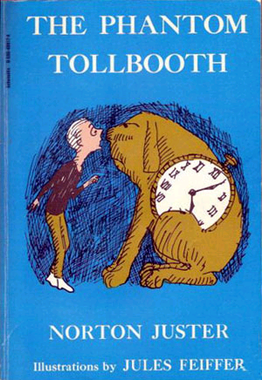
Module 8--The Phantom Tollbooth: A Review


MODULE 8:
THE PHANTOM TOLLBOOTH:
by Norton Juster


Juster, N. The Phantom Tollbooth (1961).  New York, Alfred A. Knopf

I had heard of The Phantom Tollbooth, but kept getting it confused with the silent film The Phantom Coachman (which is a classic horror film).  Tollbooth, Coachman...it isn't too much of a stretch.  The Phantom Tollbooth I think is one of the greatest books I've read, a sly, witty masterwork where words (and numbers) are used in a clever and fantastic way.

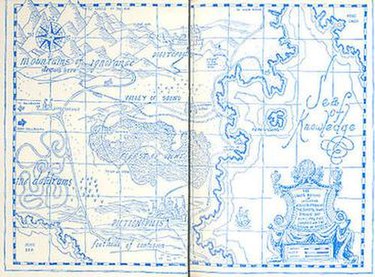
Milo is a young boy who "regarded the process of seeking knowledge as the greatest waste of time of all".  As such, education is not worth the effort.  The very next day, a box arrives and with a little assembly, Milo has a phantom tollbooth.  He takes his small electric car, pays the toll, and decides to use the map included to go to a place called Dictionopolis.

Once he goes, he finds himself in the most fantastical world imaginable: the Kingdom of Wisdom, which is surrounded by the Sea of Knowledge.  Dictionopolis is a city ruled by King Azaz the Unabridged, where words are the commodity.  On his way to Dictionopolis, Milo meets Tock, a watchdog in the purest sense: literally a dog who has a large watch as part of his body.  In Dictionopolis, he sees the word market, where letters and words are bought and sold for all occasions.  He also meets such creatures as The Spelling Bee (a large bee that spells and gets occasional work in bonnets) and the Humbug, a most loquacious creature prone to saying the wrong thing at the wrong time.

King Azaz holds a feast where the guests eat their words, and informs Milo and Tock that things have been off since the banishment of Sweet Rhyme and Pure Reason, the sisters of both King Azaz and his brother, the Mathemagician.  The brothers, angry at Rhyme and Reason's ruling that words and numbers were of equal worth, banished them to the Castle in the Sky.  Since then, the world of Wisdom has been out of whack.  King Azaz appoints Milo, Tock (who ironically goes 'tick'), and the Humbug to rescue the Princesses, but they must get the agreement of the Mathemagician, and the two brothers never agree on anything.


It looks like an impossible task, but Milo agrees, beginning a great journey that takes them to such places as the Island of Conclusions (which you can get to only by jumping), the Point of View (where a man can be the tallest midget, the smallest giant, the thinnest fat man, and the fattest thin man---and be the exact same person), the twin cities of Reality and Illusion (not particularly nice places to live in) before reaching the rival city of Digitopolis.  The Mathemagician won't agree to Azaz's idea, but Milo points out that they've both agreed to disagree on the matter of the Princesses, and no matter how the Mathemagician sees it, Milo is correct.  Like Azaz, he gives the travelers gifts to protect them as they travel through the Valley of Ignorance, where they must face demons like the Everpresent Wordsnacher Bird (who takes words right out of your mouth), the charming but dangerous Terrible Trivium (demon of petty tasks and worthless jobs), and the Senses Taker (who not only takes your physical senses but your sense of honor and worth and who is brought low because he couldn't take their sense of humor).

They finally arrive at the Castle in the Air, where the Princess Sweet Rhyme and the Princess Pure Reason have been waiting for them.  They believe it is time to return, but with the Castle cut off how to get back.  Well, time flies...and since Tock is a watchdog...well, there's logic in that.  They are chased by other terrible demons, like Gross Exaggeration, the Threadbare Excuse, and the Overbearing-Know-It-All, until the joint forces of Wisdom come at the foot of the Mountains of Ignorance and scare them away.  With Rhyme and Reason returned, Azaz and the Mathemagician hold a joint feast and pledge to work together to defeat the Demons of Ignorance.  As Milo leaves sadly for his own world, he hears the two rules begin to slowly argue over primacy.  Sadly, the next day the Phantom Tollbooth has disappeared, sent off to other boys and girls that will require its services.  As for Milo, he now saw the world in a different way: all that he failed to notice suddenly became sharp, and he saw books all around his room, which could take him anywhere, help him create anything, discover new places, new sights, new sounds, and realized he would like to return to the Kingdom of Wisdom, but he has so much to do now where once he had nothing to do.


I had never read The Phantom Tollbooth until now, but I don't think I have enjoyed a book as much as I did this one.  This is the first book to make me laugh out loud as I read it since I read a Jeeves and Wooster book by P.G. Wodehouse.   The Phantom Tollbooth is a word-lover's delight, full of witty puns all around.  If you 'leap to Conclusions', you are likely to meet the figure of Canby (as in "can be"), someone who is 'as brave as can by, and as cowardly as can be'.  You might find yourself stuck in The Doldrums, a world where the slow and uninterested Lethargians live.   In Dictionopolis, Milo is taken to the banquet by a special vehicle, where everyone must remain silent because it's one that 'goes without saying'. 

At this banquet, the King admonishes Milo for being so ordinary.  He tells them of his Cabinet's many tales: making mountains out of molehills, splitting hairs, leaving no stone unturned, but the poor Undersecretary hangs by a thread.  In Digitopolis, the numbers are mined, and if a number is broken, no worries: they use them for fractions.  If you want to walk across a large room quickly, just draw a straight line (since it's the shortest distance between two points).    

I also find The Phantom Tollbooth to be extremely quote-worthy, a valuable tome where its wit and wisdom shine through.  In Dictionopolis, Milo meets King Azaz's Cabinet: the Duke of Definition, the Minister of Meaning, the Earl of Essence, the Count of Connotation, and the Undersecretary of Understanding.  They each serve to provide synonyms to their individual statements.  Their job is to make sure all the words sold in the Word Market are proper words.  "But we never choose which ones to use, for as long as they mean what they mean to mean we don't care if they make sense or nonsense".  Alec Bings, whom they find at the Point of View, informs them that "the way you see things depends a great deal on where you look at them from".  Truer words...

After Milo meets the .58 child (since families average 2.58 children) and fails to reach the Point of Infinity, he tells the Mathemagician how he finds much of this world hard to understand.  "You'll find that the only thing you can do easily is be wrong, and that's hardly worth the effort". 


The Phantom Tollbooth is so remarkably clever and witty, and quite punny if you get what is being said.   For me, The Phantom Tollbooth is on the same level as Alice in Wonderland and/or The Wizard of Oz.  Both are about children travelling to a strange world where all sorts of impossible things and being are.  Both the main characters are rather shocked by everything because it goes against their common sense.  However, in both Wonderland and the Kingdom of Wisdom, there is a logic to everything and everyone (even if that logic is a bit bonkers). 

We also have some familiar fairy tale elements.  The rescue of a princess (or two), travels through dangerous worlds where they must face off against formidable opponents.  A triumphant return where the hero wins the day.

BRIEF REVIEW DISCUSSION

I simply loved The Phantom Tollbooth, so much so that I hope to reread it and get my own copy to which to highlight all the wonderful phrases that I think should serve as words of Wisdom for everyone to live by.  Michael Chabon, a respect author himself, commented on the wit in The Phantom Tollbooth, that while the lands and characters were allegorical, the book "manages to surmount the insurmountable obstacle that allegory ordinarily presents to pleasure".  In other words, one can learn without being overt about it.  You can read it on a surface level, or on a deeper level about the importance of learning. This ability to work both as the story you are reading as well as a deeper story is what to my mind makes The Phantom Tollbooth one of the best books I've ever read.  I will treasure this book and know that I will be revisiting it in the future.  I loved it so much I'm tempted to give it to friends and family as gifts and have recommended it to a friend in South Africa. 

PROGRAMMING SUGGESTIONS

A great program would be a Costume Party where you dress as a pun: A Spelling Bee, a Listening or Computer Bug, a Book Mark (great for boys named Mark) or a Cutting Remark.  One can create a Tollbooth where children must pay a 'fare' (maybe a set number of books checked out or read) to enter, or the crowning of a Princess of Pure Reason and Sweet Rhyme.  Finally, have students travel through the library to find such places and objects as the Valley of Decision and the Wheel of Fortune.

Norton Juster
Born 1929


REFERENCES:

Chabon, M. (2011) The Phantom Tollbooth and the Wonder of Words [Review of the book The Phantom Tollbooth by Norton Juster].  Retrieved from http://www.nybooks.com/blogs/nyrblog/2011/apr/21/michael-chabon-phantom-tollbooth-wonder-words/

Thursday, March 19, 2015

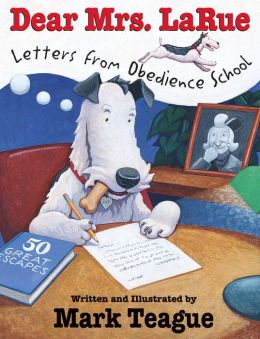
Dear Mrs. LaRue: Letters From Obedience School: A Review

 
DEAR MRS. LaRUE: LETTERS FROM OBEDIENCE SCHOOL by Mark Teague

Teague, M. (2002) Dear Mrs. LaRue: Letters From Obedience School.  New York, Scholastic Press.

Dear Mrs. LaRue takes a humorous tone on the idea of both bad dogs and school in general as Ike, the dog in question, calling to mind how children could imagine school to be.

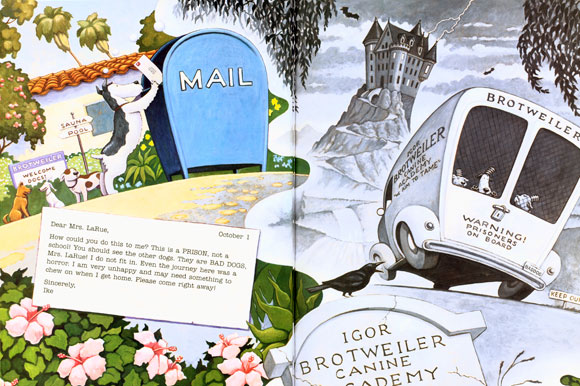
Ike, Mrs. LaRue's dog, has been sent away to the Igor Brotweiler Canine Academy.  It's really big news (down to making the local paper).  Ike hasn't been horrible, but Mrs. LaRue finds herself at wit's end,  misbehaving constantly.  Every day in his 'incarceration', Ike writes to Mrs. LaRue, describing all the horrors he must endure as well as pointing out that he wasn't as bad as all that. 

His situations are grim: they take away his typewriter!  They won't give him seconds!  Of course, what Ike says and what is real need not necessarily be the same thing.  While he attempts to show how abysmal and horrific the setting is in black-and-white illustrations (complete with striped prison uniforms), the color illustrations show a rather posh setting.   In that same dining room, we see a lavish menu, elegant dining room, and an elegant atmosphere.  The truth or not, Ike runs away, riding in (misery/luxury) as he tramps around the country, until a fortuitous chance encounter where he saves Mrs. LaRue from certain death (even if he damages her camel's hair coat...again). 


The beauty of Dear Mrs. LaRue comes in the dichotomy between what Ike writes and what he is experiencing.  We see that Ike is in more Club Med than Shady Pines, but the humor comes in the exaggerated descriptions versus the actuality of the situations. 

I think children will enjoy the story and relate to how Ike sees the world, with school really being not as bad as they think it.  Teague has a wonderful wit with beautiful illustrations extremely detailed to lend more humor. 

Friday, March 6, 2015

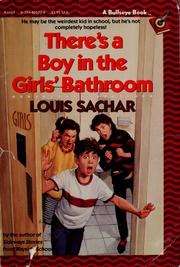
Module 7--There's a Boy in the Girls' Bathroom: A Review


Module 7: There's a Boy in the
Girls' Bathroom by Louis Sachar

Sachar, L. (1987).  There's a Boy in the Girls' Bathroom. New York, Scholastic Inc.

There's a Boy in the Girls' Bathroom is a brief book, but I found it to be a very honest and moving story of a misunderstood boy, written off by practically everyone (including himself).   Moreover, the book is one I found to be true-to-life in how elementary school politics, however bizarrely intricate they may be, do affect children for good and bad. 

Bradley Chalkers sits in the last seat, last row, with an empty chair next to him and in front of him.  No one wants to sit near Bradley Chalkers.  He has a reputation as being a pretty rotten person: he has no gold stars, never does any work at school or home, and habitually lies to get out of situations.  Although he's in the fifth grade, he has already been held back one year already and looks like he's going to be held back again.  Moreover, he's accepted other people's ideas about him as being true.  He sees himself as a pretty rotten person, confiding via his playing with his toy animals how hurt he is by their ideas about him (as well as his own ideas about him).

However, straight from the beginning things take an unexpected turn for Bradley Chalkers when Jeff Fishkin, a new student from Washington, D.C., comes to Red Hill School.  Finding no other place to sit, Mrs. Ebbel has Jeff sit next to Bradley.  To Bradley's surprise, Jeff doesn't reject him.  He appears to want to be friends with him, and Bradley reacts the way he does with everyone: by threatening to spit at him unless he gives him a dollar. 

However, the fact that Jeff doesn't reject him, Bradley Chalkers, despite how everyone in class sees Bradley Chalkers (and how Bradley Chalkers sees Bradley Chalkers), confuses him.  Despite himself, Bradley soon adopts Jeff as his best friend, and Bradley's admiration for Jeff rises considerably when Jeff tells him he accidentally walked into the girls' bathroom.  While Jeff is horrified that he did such a shocking and dangerous thing (despite the fact he did it because he got lost and was given wrong directions to the counselor's office), Bradley sees this as an act of defiance against the girls he 'hates' (Bradley says he 'hates' a lot of things and people).


During the course of the year, Bradley starts opening up to Jeff, who in turn has been encouraged in this by Carla Davis, the new school counselor who is not like the other teachers (she encourages the students to call her 'Carla').  Bradley's mother is advised to have Bradley see Carla, and while he 'hates' it and 'hates' Carla, in his own way Bradley starts opening up, not overtly but through offbeat scenarios and tales how he really feels.  In that year, Bradley temporarily loses Jeff when, under pressure to conform, Jeff starts rejecting Bradley and running with the more 'popular' kids, but circumstances in the form of getting into accidental fights with girls brings them together.

These fights upset Colleen Verigold, who has a crush on Jeff and gets flustered whenever they are together.  She works up her courage to ask Jeff to her birthday party, but that does mean that Bradley will have to come too.  Soon, gradually, Bradley and Jeff start integrating with the other boys, who slowly start accepting Bradley, especially when he makes a great basketball shot, surprising even Bradley.

Into all these crises Carla helps without being direct, but her time is brief, as parents find the idea of a counselor a waste of time and money.  Carla is transferred to another school to be a kindergarten teacher, devastating Bradley, who was starting to think that maybe a gold star next to his name wasn't an impossible dream.  In his anger he rips up the book report of My Parents Didn't Steal an Elephant, which Carla had given him and of which he was so proud of.  In a mysterious turn, Bradley discovers that Mrs. Ebbel has his book report, and it's earned him his own gold star!  Despite his own disappointments in the year, Bradley does go to Colleen's party.  Jeff is there to help Bradley navigate the strange circumstances of children's parties, and there's a small suggestion that one of Colleen's friends, Karen, may herself find Bradley much more than meets anyone's eye. 

Bradley is still disappointed that Carla has left, but he writes to her, telling her the changes going on in his life (including getting a hundred on his math exam), and sends her his favorite toy, Ronnie the Rabbit, who has a broken ear.


Sachar is simply a genius in how he captures the authentic voices of elementary school children: how they think, how they act and react to the seemingly monumental moments of their own lives.  He doesn't take a first-person style but we do get an idea as to what Bradley is thinking and feeling.  We see how Bradley perceives himself in the beginning.  Mrs. Ebbel apologizing somewhat to Jeff about the seating situation.  "Well, nobody likes sitting...there," she says.  At that point, Bradley jumps up and says, "That's right.  Nobody likes sitting next to me!"  Bradley it seems takes pride in being a monster.  However, we also read that Bradley figures everyone wouldn't mind if his desk in the closet.  This shows that Bradley may actually be playing at being a monster only because he thinks that's what expected of him.  However, because no one likes monsters, and he's a monster (even to himself), it's logical that no one likes him.  One senses this makes Bradley sad, but he thinks that's how it should be, so he won't try to change it. 

We get the idea that Bradley is trying to live up to his own reputation, which he I think has internalized to be the 'real' Bradley.  We also get the idea that within that reputation, Bradley is hiding his hurt at the rejection he gets due to his own actions.  He recognizes that he will never get a gold star, but that he does want to get a gold star.  The truth is that Bradley doesn't think he is worthy of a gold star, and as a result he won't be even try. 

The pressure to conform to other people's ideas is something I think children and adults can relate to.  Each person is trying to live up to someone else's idea of who they are but finds that they really are not what others think they are.  This is certainly the case with Bradley, who slowly starts working towards being a good person and not the 'monster' others (and himself) think he is.  We also see this with Jeff, who tries to push Bradley away once, through a strange but logical set of circumstances, he finds himself getting praise for giving Bradley a black eye that he got after fighting a tough girl.  In the end though, after Jeff himself gets humbled by the same girl, Jeff finds that he too is a good boy.


What really impressed me about There's a Boy in the Girls' Bathroom is how Sachar captured the voices of children, how they genuinely sound.  They sound, speak, and think like how one thinks real fifth graders do: panicking at a mixed party, thinking that going into the wrong bathroom is a life-altering traumatic event.  The book doesn't moralize or patronize.  It doesn't have big dramatic moments.  Instead, by keeping things totally honest in their perspective, the book sounds not only real, but also makes one identify with all the characters in some way.

I was surprised at how emotionally I got involved with There's a Boy in the Girls' Bathroom.  I felt so much for Bradley because, like his mother keeps saying to the teacher, "Deep down, Bradley's a very good boy". 

BRIEF REVIEW DISCUSSION

Audience identification is not just important, but something that readers will find quite easy to do.  "As the story moves along, readers will begin to sympathize with Bradley; they'll root for him, hoping he'll exchange his misfit status for reasonable contentment. Happily, readers are also likely to come away from the story with the sense that they've been rooting for themselves, too."  This quote from the Kirkus Review of There's a Boy in the Girls' Bathroom was in my view spot-on.  I found this to be the case too, and I think all readers will see Bradley to be a very sympathetic character and will not just want him to succeed and find he has worth, but will cheer when he realizes the goodness within him.  That I saw a little of myself in Bradley serves a great lesson in audience identification.

PROGRAMMING SUGGESTIONS

I think a good program to tie to There's a Boy in the Girls' Bathroom would be to have children pair up and make friends.  They might also write a letter to Carla or Jeff or Bradley or any other character, convincing him/her to give others a chance.  Once the papers are turned in, it might be a good idea to give them all gold stars.    


Louis Sachar
Born 1954


REFERENCES:

Book Review: There's a Boy in the Girls' Bathroom by Louis Sachar (2011, October).  Kirkus Reviews.  Retrieved from https://www.kirkusreviews.com/book-reviews/louis-sachar/theres-boy-girls-bathroom/

Sunday, March 1, 2015

Module 6--Rabbit & Robot: The Sleepover Review


MODULE 6: RABBIT & ROBOT:
 THE SLEEPOVER by Cece Bell

Bell, C. (2012).  Rabbit & Robot: The Sleepover. Somerville, MA, Candlewick Press.

Rabbit & Robot: The Sleepover is a brief but I think extremely cute and endearing little story about how things can be fun even when things don't go according to plan.   Perhaps especially if things don't go according to plan. 

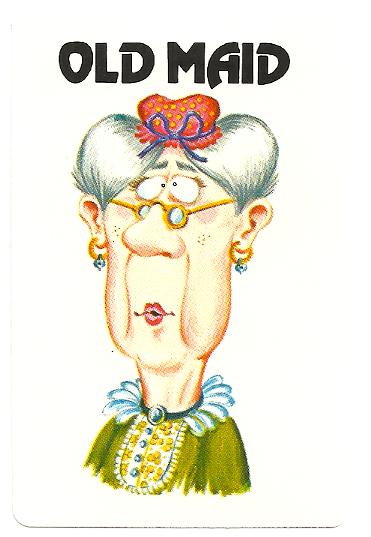
Rabbit invites his friend Robot to a sleepover.  Rabbit creates a list of four activities he and his friend will do together: Make Pizza, Watch TV, Play 'Go Fish', and Go to Bed.  When Robot arrives, he is shown the list.  Robot asks if they could play 'Old Maid' too, but it's not on the list, so Rabbit says they can't.  From there, every item on Rabbit's list meets with some sort of divergence from the list, freaking Rabbit out.  Robot each time shows him that they could keep to the list, but not in the way Rabbit expected.  In the end, just as Rabbit and Robot are about to turn in for the night, Robot presents him with his own list, coming to the conclusion that it was a good day.


Rabbit & Robot: The Sleepover is reminiscent to me of the Gerald and Piggie books in that Rabbit worries and Robot does not.  Both are unlikely friends, but the fact that this is a children's book where strict logic doesn't have to play any role makes the friendship between a rabbit and a robot plausible.

I really liked how Robot was made to behave and speak like what I imagine a robot would speak and behave.  "My Built-in Food-o-Meter reports that I am hungry," he tells Rabbit when Rabbit suggests they make their pizzas.  Later on, when Rabbit begins his frantic hunt for the television remote fearing they won't watch his favorite television show, Cowboy Jack Rabbit, Robot keeps repeating, "I have some data that will interest you".  Finally getting Rabbit to calm down, he takes Rabbit to a mirror, telling him, "Observe your reflection", to show Rabbit had the remote stuck in his rabbit ears.

Near the end of the story, when Rabbit wants to show Robot how funny he looks in Rabbit's pajamas, he uses Robot's exact words.  This to me shows the depth of their friendship, where they understand each other and like all good friendships, complement each other.

BRIEF REVIEW DISCUSSION

The review for Rabbit & Robot suggests a similarity to the Frog & Toad series by Arnold Lobel, and I think this is a pretty apt description (though since I have never read a Frog & Toad book, I wouldn't have thought of the similarity between them).  Bell admitted as much, calling the book "my attempt to be a smidgen like (Lobel)". ”  If it was a tribute to someone Bell admires, Rabbit & Robot succeeds extremely well.  What I do know about Frog & Toad is that they are brief, the two characters interact with each other well, and one is anxious, one not.  If anything, Bell I think captured the spirit of Frog & Toad with Rabbit & Robot, and I wonder whether there are or will be more Rabbit & Robot stories.

PROGRAMMING SUGGESTIONS

A good program for small children, the book's target audience, I think could come in the form of a game.  They make a list of simple tasks, then ask their partner to try to come up with unique ways of following the list.  For example, if an item is "Draw a picture", they could make a circle and invite their partner to add something.  Since part of the story involves an impromptu pizza picnic, you could also create a pizza picnic (but no bolts or nuts in them--they are children, not robots, of course).   I also would suggest an actual game of Old Maid (but since I happen to like that game myself, maybe I'm prejudiced).

Cece Bell


REFERENCES:

Book Review: Rabbit & Robot by Cece Bell (2012, July). Kirkus Reviews.  Retrieved from https://www.kirkusreviews.com/book-reviews/cece-bell/rabbit-robot/

Interview with Cece Bell by Julie Davison (October 26, 2012).

https://www.kirkusreviews.com/features/cece-bells-rabbit-robot-new-generation-finds-its-f/