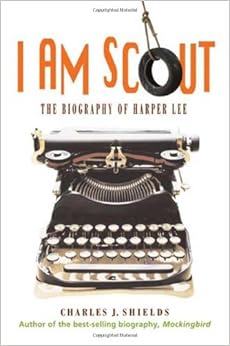
Childs, C.J. (2008). I Am Scout: The Biography of Harper Lee. Henry Holt & Co., New York.
As part of the recent Youth Literature class, as well as the fact that after fifty-plus years, Harper Lee is coming out with a second book (Go Set a Watchman), I think it would be nice to look over the life of this intensely private but pugnacious person: Miss Nelle Harper Lee, author of one of the Greatest Books of the Twentieth Century: To Kill a Mockingbird. I Am Scout: The Biography of Harper Lee, is the juvenile version of Charles J. Shields' adult biography, Mockingbird: A Portrait of Harper Lee, is an excellent read for the target audience. It gives wonderful information and insight into the intensely private author but is written in such a way that it doesn't sensationalize or delve into generally unpleasant matters (the murder of the Clutter Family in Kansas which was the basis of her frenemy Truman Capote's In Cold Blood, which Lee was instrumental in creating but which Capote downplayed her assistance).
Nelle Harper Lee's life is covered, beginning with her early years in Monroeville, Alabama. She's the daughter of the South, but no Southern belle by any stretch. Much like her main character in TKAM, she was a tomboy: willing to stand up and fight any boy, as well as play football like one. She forced her way to a game once, and she didn't go down but instead knocked others down. When the captain yelled that they were playing touch, she yelled back, "Y'all can play that sissy game if you want to, but I'm playing tackle!"
In what might be a contradiction, while she was rough-and-ready, she also had a deeply intellectual side. In one of those fortuitous turns of literature, her next-door neighbor was another future American literary legend, Truman Capote (then known by his birth name of Truman Streckfus Persons). He had essentially been dumped by his parents: the vain status-seeking Lillie May and the ne'er-do-well Archie, in the care of relatives. They were neighbors to the Lee family, which couldn't be further from Capote's chaotic life.
Lee's father, A.C. Lee, was a successful lawyer, Alabama state representative, and newspaper publisher. His oldest daughter Alice followed her father's footsteps, and at first Nelle tried to do likewise. However, her non-traditional ways in forms of dress and disinterest in being the embodiment of the proper lady (she smoked, she swore, and didn't have many if any real friendships/relationships) put her at odds with almost everyone around her. She also had a great passion: to write. The two came into conflict, and eventually, despite the misgivings of her family, she went to New York, where her old friend Truman, now known as Truman Capote (adopting his stepfather's surname), had made a big noise.
Capote, who referred to themselves as 'apart people', was one of the few in her early years to be a kindred soul. As children, they wrote together and were engulfed with books. They would carry around a new typewriter almost everywhere (except to the treehouse, as it was too heavy). As an adult, Lee started out as the prototypical struggling writer, finding a job with BOAC (British Overseas Airways Corporation) ticket seller and trying to write. A fortuitous friendship allowed her to quit her job thanks to a gift of money that would allow her to live while she devoted herself full-time to writing.

With revisions and editing, she cranked out To Kill a Mockingbird, which came at the same time that her old friend Capote came to her and asked her to be his "assistant researchist" (his term) on his 'nonfiction novel'. Her quiet manner and Southern charm smoothed the way for her loud, flamboyant, egocentric friend, who frankly irritated and shocked the conservative Kansans, who were in shock over the Clutter killings. She and Capote didn't record their interviews, relying on their memories which they shared in evenings. Often, Capote would write "See NL's notes" for clarification.
While she helped Capote, she also turned her attention to her novel, To Kill A Mockingbird. She expected it to 'die a merciful death at the hand of reviewers', but instead she appeared to hit the zeitgeist of the rising civil rights movement. The book became an immediate success, eventually winning the Pulitzer, a rare honor for a first-time novelist who hadn't published before. The book redeemed her in her eyes to not having pursued law, and the film version cemented the legend.
As time went on however, Harper Lee became irritated by all the attention she was getting because of TKAM. She worked on a second novel, but with all the publicity for Mockingbird, time just slipped by. Later on, she did declare she was working on a second book, to be titled The Reverend, in the style of Capote's In Cold Blood. Perhaps this was a way to get back at her friend, who downplayed Lee's contribution to his work (and this genteel antagonism might have been mutual, as Capote never "went to any strenuous lengths to deny" having written part or all of To Kill a Mockingbird. Lee's disillusionment with her friend, dislike to be connected with In Cold Blood, and general dislike of attention was such that she did not attend the legendary Black and White Ball Truman threw for Washington Post editor Katherine Graham.
As time went on though, the idea of publishing another book slipped. She would not speak at presentations, and her relationship with Monroeville, which has capitalized on their 'golden goose', has been fraught with tension. At one point, she threatened to sue the local historical society when it thought of publishing Calpurnia's Cookbook, basing it on own of the novel's characters. The entire run of the book had to be destroyed. Now in her 80s, she is at peace about her curious place in literature: one book (so far), yet a legend. As Miss Lee wrote to a friend, "People who have made peace with themselves are the people I most admire in the world".
I Am Scout gives us really interesting information both about her and her legendary book; for example, her choice for Atticus Finch was Spencer Tracy, even writing to him to suggest he play the role. The studio for its part, wanted Rock Hudson. Even after Gregory Peck was cast, there were subtle problems. Peck, who had a strong financial hand in the film, insisted on building up his part at the expense of the children's viewpoint (Peck insisted on removing a scene where Jem reads to a dying Mrs. DuBose because it again put the emphasis on the children and not on Atticus Finch, much to the director's sadness). She also lived in New York for several years, but disliked the city itself (she wouldn't go to Manhattan), not living lavishly despite the wealth she probably accumulated through the book. More curiously, though she lived close to friends she did not visit them or encourage visits. It is as if she, like Greta Garbo, wants to be alone.
Lee also has a curious hostility to Mary Badham, who played Scout in the film version. "(Harper Lee) rebuffed attempts by (Badham)...to communicate with her. 'Mary acts like that book is the Bible', Nelle mentioned to Kathy McCoy, the former director of the Monroe County Heritage Museums. According to a terse not in the museum's archives, '(Gregory Peck) told M.B. not to try to contact N.L.". One gets the idea that Lee respects her work, but also thinks that it is simply too difficult to live up to the legend. It is her Citizen Kane, but unlike Orson Welles, she quit while she was ahead.
Then again, she really didn't quit. She had full intention of writing many books, of telling many stories. However, the publicity, the notoriety, the passion Mockingbird was held by the public, in a way pushed Lee to not write. Shields comments that the two essays she wrote for magazines post-Mockingbird had "a strong whiff of self-righteousness", calling them too self-conscious, as if she were trying to already live up to a legend she didn't want and couldn't carry.
Harper Lee has pretty much resigned herself to both the praise and curse of To Kill a Mockingbird, a book that is good, that she knows is good, but that has also pretty much condemned her to endless comparisons, which might have frightened her from going into publishing another one...until now. At age 89, a second Harper Lee book, Go Set a Watchman, is set for publication this July (I already have it on order, though it won't arrive until a few days after initial publication. I'm not in that much of a hurry). It is called a sequel to her first book, though it apparently was written prior to Mockingbird and only recently rediscovered (even Lee apparently forgot all about it).
I Am Scout is perfect for the target audience, providing an interesting portrait of the author who has earned a place in history with only one book to her name (at least until July 2015), written in a simple tone that children will find easy. Adults can also enjoy I Am Scout as a fascinating portrait of the mostly-reclusive writer, who gave the world a wonderful story, then watched it overtaken by others whose intensions were both good and bad.
 |
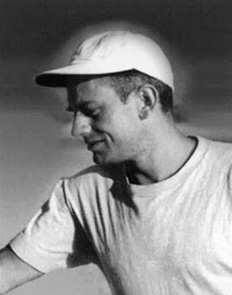
| Nelle Harper Lee Born 1926 |