Showing posts with label Historical. Show all posts

Tuesday, July 18, 2017

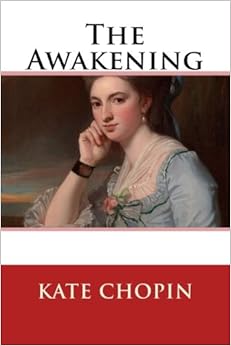
The Awakening: A Review


Chopin, K. (1899). The Awakening. Herbert S. Stone & Company, New York.

The Awakening scandalized America when it was published and it all but ruined Kate Chopin's reputation.  It was not the quality of the work that shocked the reading public, or perhaps even the subject.  It was the fact that our heroine was not just so open about her various indiscretions and actions, but that she was unapologetic about it.  To readers at the time, Chopin was essentially endorsing and encouraging a sexual and gender revolution.

Having read The Awakening, I don't think Chopin had such lofty ambitions.  I think she just wanted to tell a lush, romantic story about a female: a wife, a mother, discovering 'the woman within'. 

The Awakening is a brilliant book: sensual without being tawdry, a journey into one woman's inner exploration into self, but still bound by the confines of strict Victorian society.

Edna Pontelier is a wife and mother, and that is all she is really: wife to Leonce, mother to Etienne and Raoul.  They take a holiday to Grand Isle in Louisiana, where the family interacts with others also on the island.  Here, Edna becomes friends with Robert Lebrun, a nice, handsome younger man with whom she's bonded.  Robert appears enraptured by Edna, but she does not return his affections beyond that of a friend, possibly a motherly affection at best.

At first.

After returning from Grand Isle, Edna realizes that she has fallen in love with Robert, who has left to seek his fortune in Mexico and to get away from the temptation of Mrs. Pontelier.  Edna soon starts losing her identity as 'wife and mother' and wishes to identify as 'woman'.  Leonce is perplexed by his wife's actions: her withdrawing from society to where she won't make or receive calls as expected, her growing disdain for rearing her children (though she still loves them).

At one point, she becomes so internally enraged that she takes her wedding ring off and slams it on the floor, then stomps on it.  She is finding her world now growing more intolerable and yearns for freedom.

Freedom comes her way when Leonce leaves for business and the children go to their grandmother's plantation.  Edna now feels free to be 'a woman': she moves from her large home to a smaller quarters, takes up painting and sketching, and has a fling with notorious rogue Alcee Arobin. 

Worse, she is unapologetic about carrying on in such fashion.

Eventually, Robert returns and they admit their love to each other, but I don't think they consummate it.  Edna is thrilled, but soon is devastated when he again leaves, knowing it is impossible for her to leave her husband without there being scandal.  Edna, now lost between the confines of society and the desires of her heart and flesh, eventually swims out further and further to see, presumably killing herself.


It's curious that The Awakening caused such an uproar when, if you think about it, Chopin in the end bowed to society's expectations by essentially killing off her main character, by suicide no less.  Had there been any other type of ending: a divorce, Edna murdering Leonce, running off with Robert, running off with Alcee, then I think the scandal would have been justified.

However, Chopin opted for what I thought was a terrible choice: in essence, having her once-independent character kill herself for her 'sins'.  I like to think the ending is a little ambiguous: she just keeps swimming further out to see, but could she not have turned back or have been rescued by a boat?

I figure that's highly unlikely, but there's a part of me that hopes.

Again, given that Edna did 'pay for her sins' by drowning, I would have thought readers back then would have seen in The Awakening a morality lesson about how 'proper women' should behave and what can happen if they go outside acceptable roles for women.  I would have thought it was all very tidy and Victorian.  However, that wasn't what happened.

People focused on Edna's liberation, her desire to be free and as we say now, 'do her own thing'.  The scandal was that she rejected the proper roles a married woman was supposed to have.  She did not want to be a wife and mother.  She wanted to be Edna, a woman in full if you like.  By her rejecting the expected role society placed on her, by her desire to follow her own wishes, wants and desires, therein lies the 'scandal'.

Edna finds herself going through her own version of a midlife crisis: finding in Robert an object of desire, and from that discovery came others about who Edna the person was, not who Edna the wife and mother was supposed to be.
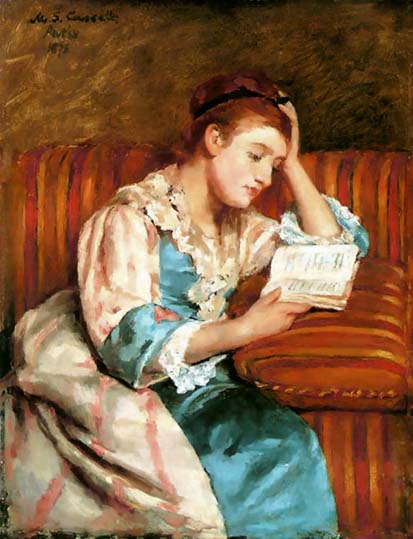


The scandal was that Edna wanted independence.  I wouldn't say she necessarily wanted a divorce or regretted being a mother.  I think she loved her husband and her children, but she wanted something of her own, something that was uniquely, wholly, solely 'Edna'.  If Leonce, perhaps, had encouraged her in exploring her creative side, even taking the children while she had time to herself, perhaps the greater tragedy could have been avoided.

Leonce, however, was like every man back then: one who believed a woman was either a wife, a mother, or not there.  He at one point consults an old doctor about Edna, concerned that she's gone bonkers. 

Chopin shows that Leonce didn't bother asking Edna what ailed her, or that he thought that maybe Edna wanted nothing more than some freedom.  Instead, his horror at her refusing to call on receive calls as she did before, her growing disinterest in keeping up appearances both social and familial, all led him to think something was mentally wrong with her.

The Awakening is a brilliant book.  Chopin, like many a good writer, uses symbolism without being overt about it.  She does this with two characters: Mademoiselle Reisz and Madame Ratignole.  Edna met both at Grand Isle and became friends with them, later becoming the few people Edna would call on back in New Orleans.  Reisz, who expressed herself via her piano regardless of how good or bad she was, was free to do as she wished, unbound by marriage.  Ratignole was perpetually pregnant, and she might be what Edna feared she could be: a mother and nothing more.

The fact that both Reisz and Ratignole were happy as they were because those were their authentic selves is something that Edna, I think, failed to understand.  Reisz was born to be completely independent, Ratignole was born to be a happy mother.  Those aspects of themselves brought them happiness, and Edna I think wanted something in the middle but couldn't balance the two.

Chopin, via Reisz and Ratignole, gives us two sides of a coin, and our main character has to struggle between the two.
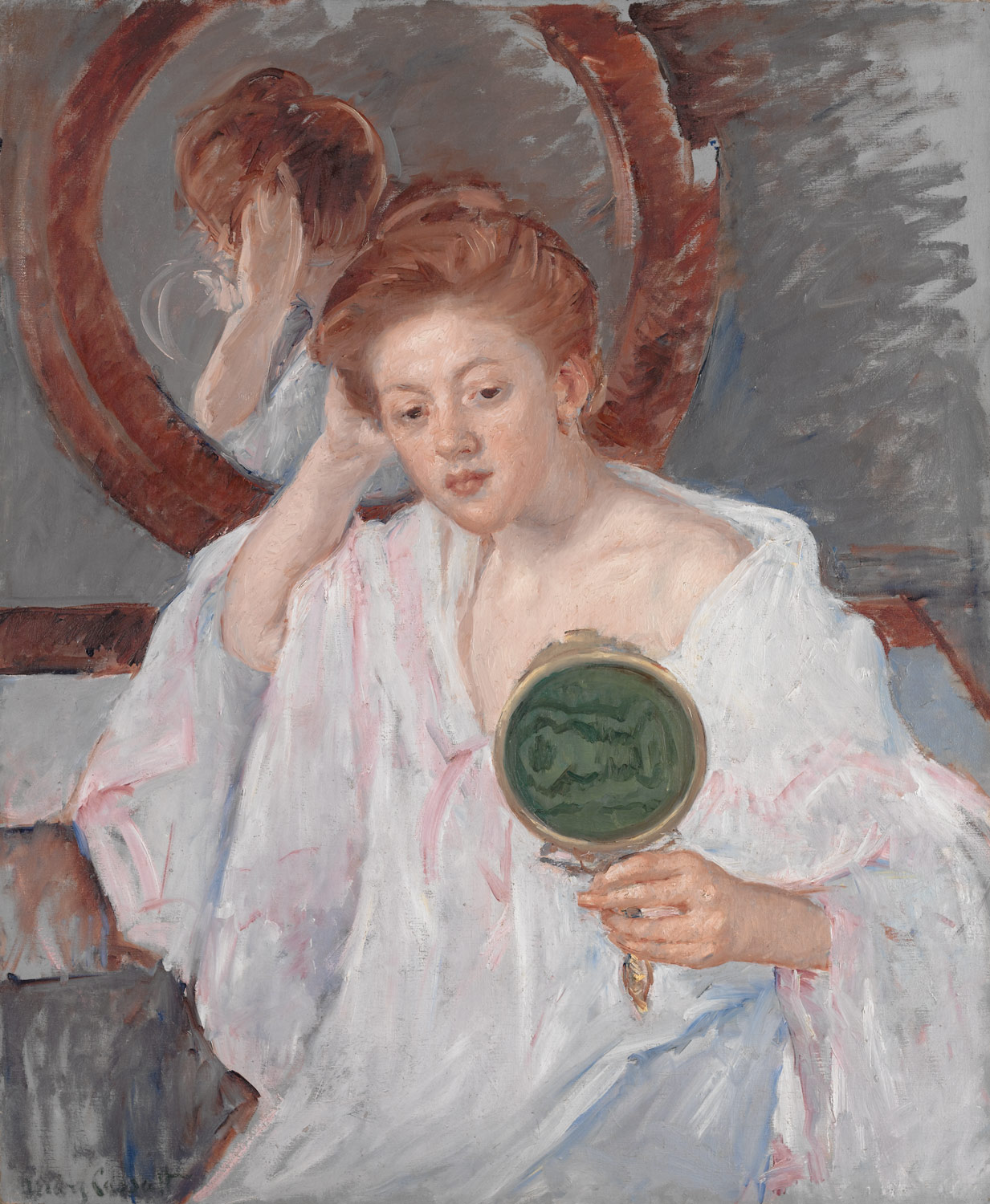


We also see the symbolism when Edna, in a rage of pent-up frustration, pulls her wedding ring off and stomps on it.  Here, she is in essence rejecting her identity as 'wife and mother', rejecting the confines she finds herself in, and metaphorically wants out of the confines society places on her.  Edna's rejection of callers, even her change in wardrobe where she stops wearing corsets if memory serves correct also symbolize Edna's rejection of societal expectations and her desire to be free.

Edna, to me, was a real person, one who had a growing realization, an awakening, that her life wasn't just what others defined her as but what she was, who she was.  She starts out as someone who is if not happy at least content within who she thinks she is.  As time goes on, as she looks around her, and as she sees in particular the ardor Robert holds her in, she soon starts questioning her world.  In the end, while that world in effect swallowed her up, she in the interim discovered 'the woman within'.

The Awakening is a title with many meanings.  It was a sexual awakening with Edna's passion for Robert and her tryst with Alcee, representing the man who was available versus the man she loved.  It was a spiritual awakening, with Edna discovering herself. It was an awakening of the soul, the mind, and the body.  Edna now essentially rose as if from sleep, to discover a new world.

Chopin's language is lush, if perhaps a bit florid for my tastes.  However, Chopin has an almost poetic quality to her writing in The Awakening, one that flows like the Mississippi: slow, easy, but without a touch of turbulence.

I don't see why now, The Awakening can be considered scandalous.  Perhaps because Edna is almost brazen about pursuing her own desires at the expense of her marriage and family.  I can see why it was so shocking and scandalous for the time, and even why now, Edna's self-discovery can be seen as tempestuous. 

Truth be told, I wasn't thrilled with the ending: seems rather weak of Edna to kill herself because she couldn't have the man she loved.  It almost felt as if Chopin were caving in to how our heroine could not be allowed to 'get away with it'.  Still, the ending is not completely false: perhaps Edna simply no longer cared about anything now that her raison d'etre was gone.  I always thought it was to conform to society's wishes to punish the 'wanton woman'.  Apparently that wasn't enough for readers at the time, who all but shunned Kate Chopin and The Awakening as a 'dirty book'.

For myself, I thought The Awakening a brilliant book, one that every man and woman should read.
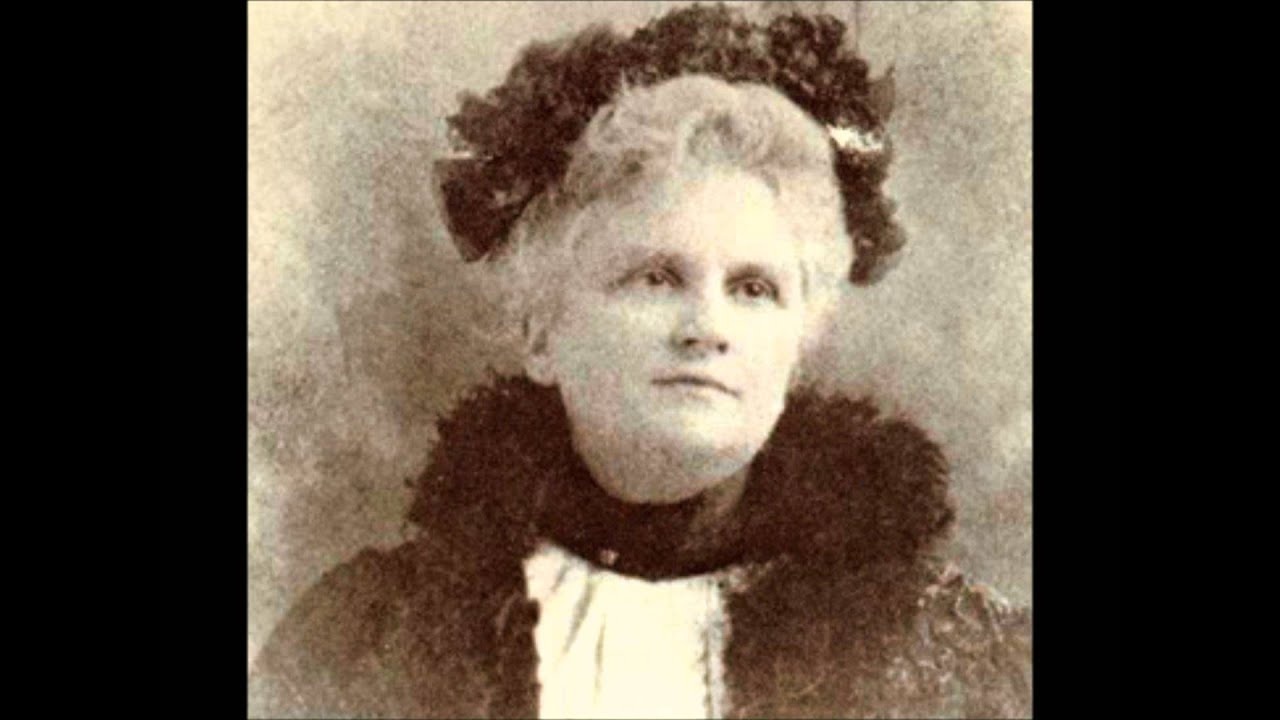

1851-1904

Monday, July 20, 2015

Freedom Summer: A Review


Wiles, D. (2001).  Freedom Summer.  Aladdin Paperbacks, New York.  Illustrated by Jerome Lagarrigue.

It's a bit sad that Freedom Summer came when it did.  I had requested from the El Paso Public Library around March, and it finally came in in July.  It took all that time after my request for a copy to be found, despite there being a few listed among the EPPL's collection.  In any case, we at last are able to look at Freedom Summer, the story of two boys and their friendship.  One is white, one is black, and that is what makes this friendship so unique in its time.

Joe, the narrator, talks about his best friend, John Henry Waddell.   He is the son of the family maid, Aunt Mae.  Joe and John Henry spend their days going to the local creek to swim, and then Joe gets ice cream for himself and John Henry, who being black, cannot go in.

One night at dinner, Joe learns that a new law will allow blacks to go to all public places.  That includes the local swimming pool.  Joe is so excited because now John Henry will be able to go there, and they can swim together at the pool.  When they get to the pool, however, they find that the pool was being filled in with tar.  The local government has decided to close the pool rather than allow blacks to swim.  John Henry and Joe can only sit at the diving board and look on the filled-in pool.  Joe tries to comfort John Henry by suggesting they go back to the creek, but John Henry makes it clear he wanted to go into the pool. 

With that, Joe decides to take John Henry to get ice cream, and to go in together.


Freedom Summer is a simple story told simply and sweetly.  It is easy for children to read, using simple words that they will understand.

The subject matter is hard for children today to understand.  We are long gone from the time of legal segregation, and Freedom Summer has an opening statement attempting to make clear what the laws were at the time desegregation took place.  Deborah Wiles mentions also that some businesses and locations closed, some permanently, rather than integrate.

I don't see a flaw with Freedom Summer, perhaps apart from the idea that Joe would want to see the world through John Henry's eyes.  Try as he might, Joe will never be able to see it with that vision because as a white boy, he has an advantage that John Henry will not have, at least until a generational change allows for it. I do find it a bit odd that Joe wouldn't see the difficulty of integration coming one day to the next. 

Again, children are not born with prejudices.  They are blessed with being free of preconceptions that plague the 'wiser' adults.  They see things from different eyes.  As such, Joe might not have understood that people would object to John Henry going to the pool.  He knew enough to know John Henry couldn't go into the ice cream shop with him.  He did understand how things work, but when it comes to the pool, he didn't.  I found that a bit odd.

On the whole though, Freedom Summer has a positive message to give and tells it in a way children will understand.  It ends on a positive note, with Joe inviting John Henry to go into the ice cream shop together.  It's a small step to racial equality, but they are small boys.  


Friday, May 1, 2015

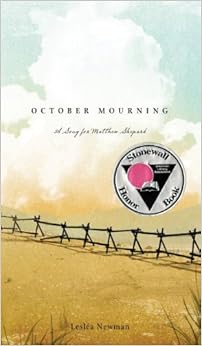
Module 14--October Mourning: A Song for Matthew Shepard: A Review


MODULE 14
OCTOBER MOURNING:
A SONG FOR MATTHEW SHEPARD
by Leslea Newman

Newman, L. (2012). October Mourning: A Song for Matthew Shepard.  Candlewick.

There are certain facts not in dispute.  On October 6, 1998, Matthew Shepard, a 21-year-old gay man, was savagely beaten and left to die.  The next morning, he was found by a passing runner.  Matthew Shepard died five days after he was found, never having regained consciousness.

Matthew Shepard is now all but canonized, a secular martyr.  He is to the gay community what Emmett Till is to the African-American community: a young man murdered with such particular brutality and savagery that it shocked the nation and galvanized people to act against bigotry. There have been plays written about Matthew Shepard (The Laramie Project), songs written about Matthew Shepard (such as Melissa Etheridge's Scarecrow), whole choral works written about Matthew Shepard (Elegy for Matthew) .  The poem cycle October Mourning: A Song for Matthew Shepard, is thoroughly immersed in this canonization, presenting in verse various 'voices' on the Shepard case.  Some of the poems are moving, even beautiful.  Some fall flat and are heavy-handed.  Some work amazingly well despite what at first is an odd premise for some of them. The inside flap noted that Ms. Newman's poems "explores the impact of the vicious crime through fictitious monologues from various points of view, including the fence to which Matthew was tied...".

I read that and thought, "Seriously? The point of view of the fence?  How does one get the point of view of an inanimate object?"  Newman does it extremely well.  Whatever flaws in some of the sixty-eight poems in October Mourning (ranging from a mere 12 words to two pages), all of them come from the heart.

The poems are divided into four parts: Prologue, Part One, Part Two, and Epilogue, with an Introduction and Afterword by the poetess.  Each poem reflects a myriad of views on both Shepard and the two men convicted of his murder: Aaron McKinney and Russell Henderson.  The first poem, The Fence (before) is a brilliant piece of writing. 

It first appears the fence is talking about itself when it says, "the sun warms me/the wind soothes me", but then it shifts to what can be seen as what could be Shepard's own ideas (or that of any person): "will I always be out here/exposed and alone? will somebody someday stumble upon me? will anyone remember me after I'm gone?"  The transition is so smooth one barely notices it.

Another brilliant poem was The Armbands (yes, about armbands used in support of Shepard).  "Though we are worn/we are not weary...though we are yellow/we are not afraid...though we are tattered/we are not broken...though we are many/we are standing as one".  The double meaning within the poem is clear ('worn' as in wardrobe and 'worn' as in 'exhausted'), especially when put against 'weary'.  They 'wore' the armbands, but they themselves were not 'worn out'.

Of course, with sixty-eight poems, not all of them were as smooth or as clever or as gentle as others.  There is Thirteen Ways of Looking at Matthew.  It is divided into thirteen words, each punctuated with a Roman numeral.  When we get to X, we slip from respecting and honoring Matthew Shepard and slip into virtual worship.  X: Martyr.  XI: Hero. XII: Legend.  XIII: Star. 

Another poem that caused me concern was The Defense's Job, which is a companion piece to The Prosecutor's Job.  They mirror each other in style, but they also mirror each other in hatred towards Henderson and McKinney.

his job
his only job
his one and only job
 
is to protect
is to preserve
is to spare
 
the client's
the criminal's
the killer's
 
life
 
even if no one else thinks
even when no one else thinks
even though no one else thinks
 
the brute's
the bastard's
the son of a bitch's
 
life
 
is barely worth
is hardly worth
is just not worth
 
saving
redeeming
a damn

Perhaps it is my own background (one that firmly opposes the death penalty as I oppose abortion, seeing them as two sides of the same coin: namely, state-sanctioned killing not in defense of the country or self), but I am a firm believer in redemption for all.  It is not within my heart to say that even the most loathsome individual is beyond salvation (however he/she interprets that). What McKinney and Henderson were convicted of is evil, and the gruesome details are sickening.  However, unlike another poem, Jury Selection, I cannot condone killing one man for having killed another.

Jury Selection: the poem consists of the line, "No I would not hesitate to kill the killer in a heart beat  in a heart beat", with each line adding an extra word until it forms the complete sentence, then taking a word away after the sentence is formed.

Of course, this is what I think good poetry should do: affect us on a personal level.  There were many poems in October Mourning that did so.  A Chorus of Parents is like all the poems in the book, an imagined conversation, this time putting us in the minds of several parents who broke off relations with their gay sons and now wish to reestablish them in the wake of Shepard's murder.  So many stories collide ("I called my sixteen-year-old, eighteen-year-old, twenty-five-year old, thirty-seven-year old, fifty-six-year old son", "I called my son who came out when he was fourteen, fifteen, nineteen, twenty-two, thirty-two, fifty-two, a week ago, a month ago, a year ago, five years ago, half a century ago").

I placed myself in their shoes, thinking if I had a gay son who came out to me what would my reaction have been.  I personally know of no parent who danced in the streets when their son/daughter told them they were gay.  I don't know of any parent who said, "I'm thrilled that my son is gay.  It's a dream come true, everything I've always hoped he would be.  My greatest desire was to have a gay child."  I know parents who are very accepting of this news, but I also know that within every single parent I know who has faced this news, there has been at least a touch of sadness in the news.  To say that there isn't is to lie. 

We as a society have not progress to the point where a parent rejoices in the news that their child is gay/lesbian.  We have parents who accept it and love their children no matter what, but I have yet to hear one parent ever say they wanted their son/daughter to be gay.  Acceptance of a gay child is not the same as desiring to have a gay child.


Recently, there has been a whisper of a disparaging word against the Legend of Saint Matt.  Stephen Jimenez's The Book of Matt presents an alternate version of the motive in Shepard's murder.  Instead of being a monstrous hate crime due to Shepard's homosexuality, Jimenez (who himself is gay) argues that his murder was a result of the drug trade Shepard was alleged to be involved with.  IF Shepard's murder was not connected to his sexual orientation but to illegal activity, it more than changes the narrative.  It all but obliterates it.  The central premise of all the works on Shepard (including October Mourning) now become grist for a myth, perpetuating a false narrative if Jimenez's allegations are true.  It doesn't rob the good poems of their power, but it does undermine the premise that they are built on, the story of an innocent now becomes a darker tale, one where the truth is not as clear.  It also has the effect of making Matthew Shepard less a saint and more a sinner like you and me, with the same flaws, faults and failings as any other mortal.  It doesn't justify, rationalize, or condone his killing, but it does make Matthew Shepard less than the sum of his official story.

It brings to mind the famous quote from the film The Man Who Shot Liberty Valance.  "When the legend becomes fact, print the legend".  Does it really matter what the motive was in Shepard's murder?  If it wasn't homophobia gone wild but instead a sordid drug-related crime, does that take away from the important symbolism of Shepard?  It certainly doesn't justify the murder, but one has to ask, would there be works like October Mourning, Elegy for Matthew or The Laramie Project to lament someone killed in a sordid meth-related crime gone hideously wrong?   


I now have serious questions about both The Book of Matt and works like October Mourning.   Is the former true or a lie?  Is the latter perpetuating a myth or a passionate reaction against a monstrous evil?  I can't answer either  with total certainty.  As Newman stated, there are only three people who know for certain what happened: two in prison, one dead. 

However, I think we can get an idea of where Newman would stand on this if asked.  In The Prosecutor's Job, she writes of "a robbery/a kidnapping/a killing; which cannot be excused/which cannot be forgiven/which cannot be undone; the rest is irrelevant/the rest is history/the rest is baloney; he rests his case" (emphasis mine).  October Mourning was written long before The Book of Matt gave an alternate version of the story, and I'm only speculating, but perhaps Ms. Newman spoke for those who believe that even if Shepard was not the "Martyr/Hero/Legend/Star", in the end "the rest is irrelevant".

October Mourning comes from the heart, a true emotional outpouring of the author's feelings over her interpretation of the crime from various viewpoints.   No one has ever argued that Shepard's murder, whatever the motive, was right or justified.  It was a brutal, horrific crime.

BRIEF REVIEW DISCUSSION

In the Kirkus review for October Mourning, it was pointed out that "while the collection as a whole treats a difficult subject with sensitivity and directness, these poems are in no way nuanced or subtle." It also took Newman to task for being 'somewhat heavy-handed".  I find these observations to be highly accurate, but I also think that despite some stumbles (which shouldn't come as a surprise for a work that contains so many works), October Mourning, when it works, works extremely well.  October Mourning is itself a very moving Elegy for Matthew.
 
PROGRAMMING SUGGESTIONS

A great program would be to have a GLBT speaker talk about his/her experiences pre and post-Matthew Shepard.  A production of The Laramie Project would also be advisable if possible, and a display of the various social moments in America (suffragists, civil rights, gay rights) might also be good.  I also think the creation of a rainbow artwork with messages could be constructed.

Matthew Wayne Shepard:
1976-1998

REFERENCES:

Book Review: October Mourning: A Song for Matthew Shepard by Leslea Newman (2012, July). Kirkus Reviews.  Retrieved from https://www.kirkusreviews.com/book-reviews/leslea-newman/october-mourning/

Sunday, April 12, 2015

Module 11--Ballet For Martha: Making Appalachian Spring: A Review


MODULE 11:
BALLET FOR MARTHA:
MAKING APPALACHIAN SPRING:
by Jan Greenberg and Sandra Jordan, illustrated by Brian Floca

Greenberg, J. and Jordan, S. (2010).  Ballet for Martha: Making Appalachian Spring. Roaring Book Press, New York. 

I figure making a book about the creation of an iconic American ballet is a tough sell.  You've got to be true to history and you have two subjects that don't lend themselves naturally to the written word: the art of dance and the art of music.  Ballet for Martha: Making Appalachian Spring, does this efficiently, with beautiful illustrations and great text that together flow as easily and excellently as Aaron Copland's score and Martha Graham's choreography. 

Martha Graham:
1894-1991
We get a quick introduction to our three figures: Martha Graham, the choreographer (or creator of dance), Aaron Copland, the composer, and a generally unsung figure in the creation of the ballet Appalachian Spring, Isamu Noguchi, the artist (in this case, set designer). 

Each figure goes through a creative process and progress.  For Graham, it is coming up with both a scenario and with the dance movements.  She has to create a story that can be told in dance, and that can be both creative and one that can be performed by the dancers.  It isn't easy, as she keeps working and reworking her choreography.  Graham also has the added burden of finding her style not embraced by the times.

Aaron Copland
1900-1990
For Copland, it is in finding the right music to which to tell the story he's been given: a pioneer wedding.  He comes across a Shaker hymn, which inspires him.  He writes out the music, waits for it to be approved, and even doesn't mind when the score is rearranged to fit the dance.  For Noguchi, it is going beyond his usual sculptures and creating a minimalist set that can work with the dancers and their movements.

Finally, the big day comes: October 30, 1944, where Appalachian Spring (a title Graham found in a poem and which she liked despite having nothing to do with the ballet) premieres in Washington, D.C. at the Library of Congress.  Ballet for Martha then describes through words and illustrations the ballet itself and the great success Appalachian Spring had.  The book ends with the idea of a revival of Appalachian Spring, with new dancers coming to recreate this uniquely American story.  We know that it is a new interpretation, for we see a multicultural dance company performing the dance.  We also get a "Curtain Call" section, giving brief biographies of Graham, Copland, and Noguchi and the footnotes that credit the information.

Isamu Noguchi:
1904-1988
 
Ballet for Martha as I said has a very difficult task.  How exactly does one recreate on a page the freedom of movement or the sound of music?  Appalachian Spring is one of the seminal works of American culture: Copland's score, in particular his interpretation of the Shaker hymn Simple Gifts is among the greatest and most recognizable works in American music.  The choreography to Appalachian Spring was a landmark in American dance.  Therefore, how to show this physical work in a book?


A great deal of success to Ballet for Martha is due to Floca's illustrations.  They are simple but elegant.  In particular, Floca has a vitality when illustrating the leaping and movements of various dances.  We don't just see the illustrations to show how Appalachian Spring was, but also a previous Graham ballet, 1929's Heretic.  We don't get a description of what Heretic is about, but the fact that Floca's illustrations show Graham all in white facing a group of women towering over her all in black is a strong explanation of what Heretic entails.  We see this with Floca's illustration for Appalachian Spring as we see the exuberance and the quiet of the dancing.

Floca throughout Ballet for Martha shows us how the dancers told the story through movement.  The text by Greenberg and Jordan take great care to explain what is going on in the story.  Ballet can be a bit opaque to many people, especially children not involved in ballet.  As such, to see Greenberg and Jordan's text alongside with Floca's illustrations we get as much impact as possible for the page.

"The bridegroom leaps and bounds like an acrobat, strutting, swaggering, showing off for his bride." 


The text above is complimented with illustrations of the various athletic movements of the male lead, concluding with a full-page illustration of the Bridegroom posing in a powerful position, muscular arms thrust out, almost as if he were more prizefighter than ballet dancer.  They do the same when they describe the 'fiery' movements of the Preacher, almost as an avenging angel warning sinners of the wrath of an angry God.

Ballet for Martha also gives us not just the story of the creation of Appalachian Spring, but about the importance of collaboration.  Each figure (Graham, Copland, and Noguchi) worked together to create Appalachian Spring.  We don't read that any of them said it had to be done their way.  In fact, we read that Graham had to rewrite her scenario again and again, and that Copland didn't object when his music was rearranged.  Whether the last part was true is not in the notes, but we trust that if there was, it would have been mentioned.  As it stands, there is no sense that Appalachian Spring was anything other than three great artists collaborating and working in tandem to create a masterpiece.  


Above all else, Appalachian Spring is an AMERICAN creation: a piece that is about an American subject, drawing from American music, infused with the American spirit of freedom.  This is why it was extremely clever to end Ballet for Martha with a whole new group of dancers performing Appalachian Spring, one that featured minorities in the prominent roles.   It shows that dance companies around the world are able to perform Appalachian Spring as a work that celebrates America, or at least acknowledges that the United States has its own unique culture. 

BRIEF REVIEW DISCUSSION

In her review for Ballet for Martha, Jennifer McDonald observed that after reading it, "the book's earnestness may appeal to young dancers (and will undoubtedly send them to YouTube to see "Appalachian Spring" for themselves." I can testify that it wasn't just 'young dancers' who were intrigued to see what Appalachian Spring was all about.   I think readers will want to know more about Appalachian Spring, and fortunately, we have video of the ballet with Graham recreating her original performance. 

PROGRAMMING SUGGESTIONS

Obviously, a performance of a selection from Appalachian Spring would be an excellent program to have for Ballet for Martha.  We could also have either a band perform the score's most famous work, Copland's version of Simple Gifts, or have a choir sing this and other Shaker hymns.    

REFERENCES:

McDonald, J. (2011, January 14). Rhythms of a New Land. The New York Times Book Reviews.  Retrieved from http://www.nytimes.com/2011/01/16/books/review/McDonald-t.html?_r=0

Monday, April 6, 2015

Module 10--The Berlin Boxing Club: A Review


MODULE 10:
THE BERLIN BOXING CLUB:
by Robert Sharenow

Sharenow, R. (2011) The Berling Boxing Club. HarperTeen, New York.

The Berlin Boxing Club is a brilliant book.  This story, while fictional, plays so authentically that it reads almost like the memoirs of a young man who with a mixture of good luck and skill manages to escape the horror that would engulf all of Europe.  Integrating the real and the fiction, The Berlin Boxing Club crafts its story of triumph, tragedy, and a young man's growth to manhood all in a brilliant

Karl Stern is a secular German with Jewish heritage, but he doesn't think anything of it.  The Stern family is not religious (Karl's father, Sigmund, is at the very least a hostile agnostic if not an atheist).  The Sterns are an intellectual family: Sig is an art dealer, Mrs. Stern is a cultured though emotionally fragile wife, and Karl's younger sisters Hildy (for Hildegard) is a typical child.  He and Hildy are very close, and Karl gladly accepts Hildy's nickname for him: Spatz.  This is from her favorite children's book series about the adventures of a mouse named Winzig and its friend, a bird named Spatz, who always outwit the stern train station manager Fefelfarve.  The Spatz und Winzig stories inevitably had their call to arms, "There's adventure in the air...and cake to be eaten!"   Karl has an enthusiasm for cartoons and dreams of creating his own strip, even creating some Spatz und Winzig cartoons for Hildy..  Mr. Stern thinks these activities are a waste.

Despite Karl's lack of observing Judaism and his non-Jewish looks (he is fair and has a small nose, due to his only non-Jewish grandparent), he is still Jewish by heritage.  That makes him a target for the Wolf Pack, a group of bullies who are encouraged to violence by the growing rise of Nazism in Germany.  The Wolf Pack beat him up viciously (confirming Karl's Judaism when they pull his pants down and see he is circumcised).  Karl ends up urinating in front of them, adding further humiliation.

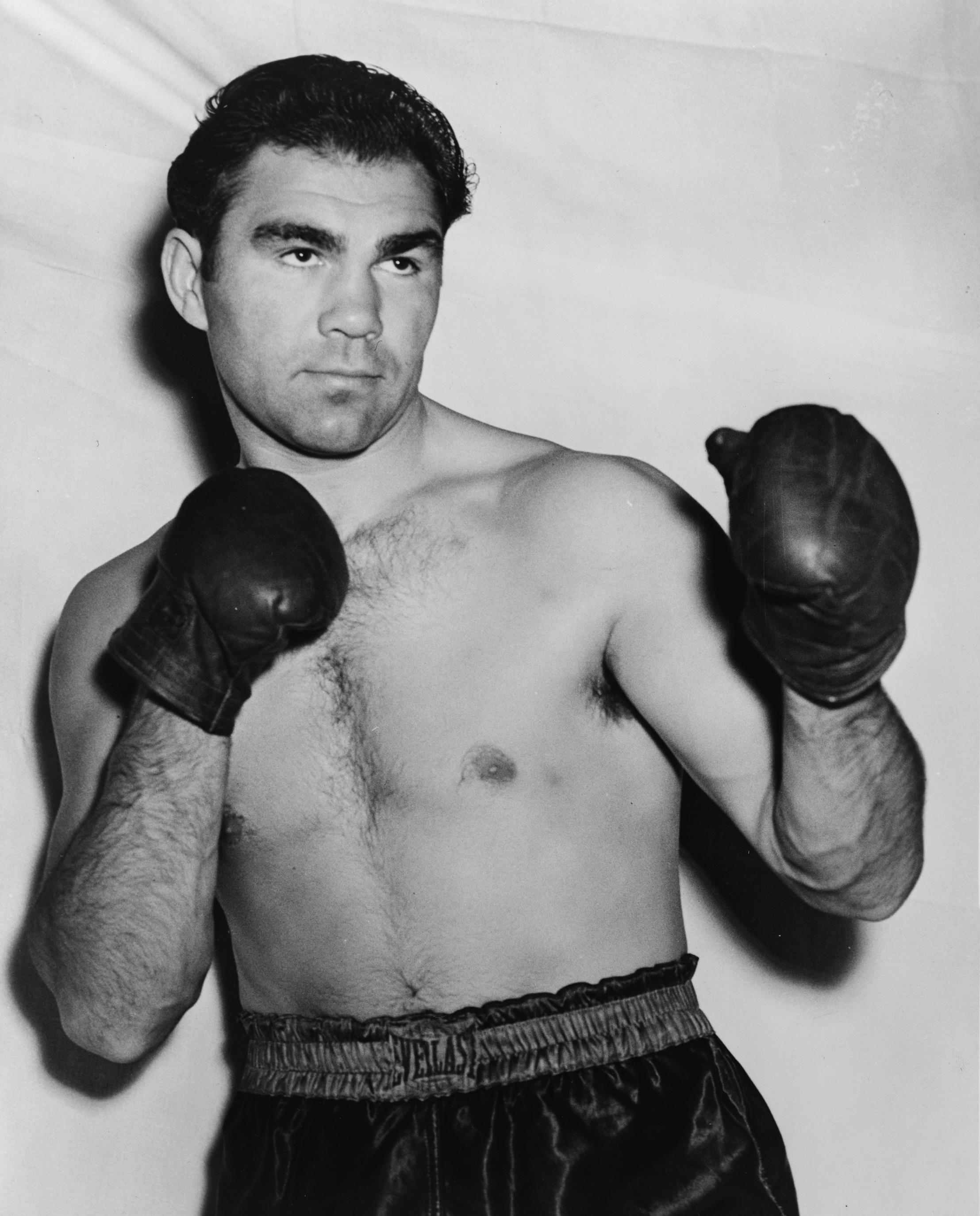
He goes to the Gallery Stern, which is facing tough times from two fronts.  First, the Sterns were big proponents of what has been declared "degenerate art", now forbidden by the Nazis.  Second, as Jews their business has dried up.  Finances are down and while they put up a brave front it's clear times are tough.  However, help comes from an unexpected source: legendary German boxer Max Schmeling, who has done business with Sigmund and is something of a patron.  Schmeling is not fooled by Karl's "falling down stairs" story: he knows boxing bruises when he sees them.  He also sees that Karl has the raw material to be a successful boxer.

Schmeling's wife, actress Anny Ondra, has taken a shine to a painting of Schmeling (one of the few that isn't the kitsch the Nazis like), and the boxer and Sigmund strikes a very reluctant deal.  He will give Karl boxing lessons in exchange for the painting.  Sigmund, who finds the sweet sport beneath intellectuals, isn't keen on the idea, but who can deny Max Schmeling?  Karl for his part, is thrilled.

Max Schmeling
1905-2005

Karl finds himself in the Berlin Boxing Club, where Max does show him a few things, but most of his training is really done by the BBC's owner, Worjyk, and Nebling, a big guy with a soft voice that stutters and quite a gentle man.  Despite Worjyk's hesitation, what Max says goes, and Karl begins training at the BBC.  He also follows Max's instructions about the 300 to the letter (100 push-ups, 100 sit-ups, 50 pull-ups, fifty minutes of running).  Over time, Karl begins to build himself up physically and begins to also gain the respect of the other BBC members.  He even wins a few fights and Max hopes Karl will be the German Youth Boxing Champion.

However, times continue to get tougher.  Karl's beloved Uncle Jacob is arrested (whether due to his Judaism or his Communist activities or both is unclear) and sent to Dachau.  The Nuremberg Laws strip Jews of basic rights and Karl is expelled from his school.  Hildy has rotten apples thrown at her because unlike Karl and his mother, she looks like Sigmund (read, more Jewish).  The Gallery is forced to close and only money from printing secret invitations to boys/men's only parties hosted by a transvestite known as The Countess keep them afloat (the Countess and Sigmund having served together in the war, with Sig having saved his life).  Max is too busy with his fights against legendary Joe Louis to give Karl or the rising anti-Semitism much thought or notice (though we learn he is displeased by it all).  Eventually, Karl's romance with his Aryan neighbor Greta is discovered and because he mixed with a non-Jew, the whole family is evicted from their apartment.  They take refuge in the closed gallery. 

Barney Ross
1909-1967

Despite this (or perhaps because of this), Karl continues to train, his looks shielding him mostly from the bigotry.  He even finds new heroes, a whole world of Jewish boxers he was unaware of, like the American Barney Ross. Karl finds inspiration in boxers like Ross, who show that Jews are able to fight, these Sons of Solomon, these Hebrew Hammers.  They are not ashamed, and neither is Karl.  He comes close to his goal of a championship, even getting a beautiful blue robe with "Berlin Boxing Club" on it, until he fights one of the Wolf Pack in the ring and after the bully's loss, the others reveal Karl's Jewish heritage, disqualifying him immediately.

Eventually, Sigmund and Karl attempt to defend their home during Kristallnacht, but Sigmund is stabbed by broken glass by the crazed thugs.  His mother manages to get her husband medical attention but is forced to leave Karl and Hildy behind.  With no one else to turn to, he asks help first from the Countess (who takes them away while dresses as a woman during the chaos), and finally from Schmeling himself.  Schmeling is appalled at the violence going on but his star has fallen after he fell to Louis. Still, despite the danger, Schmeling does what he can and helps Karl and Hildy find their mother.  She insists on them taking some random books with them, as she and Max have managed to get them passage to a ship bound for America (despite having to separate them).  She will continue to care for their father, and as they leave, Karl discovers that the books contain rare works of art that they can use for finances.  While Karl and Hildegard Stern manage to leave Nazi Germany for safety in America, they still wish their parents were with them.  Still, 'there's adventure in the air, and cake to be eaten'.

Cletus Seldin "The Hebrew Hammer"
Born 1986

I was extremely moved by The Berlin Boxing Club.  Robert Sharenow uses a first-person narrative that allows us into Karl's mind.  In many ways, Karl's story is that of many a young man who find that being different makes them a target.  In this case though, it is mixed with the horror of the anti-Semitism that the Nazis would turn into one of the most barbaric crimes in human history.

Karl does not become more observant or religious.  He still pretty much has no real interest in G-d.  However, over time he grows to accept and embrace his Jewish heritage, especially after learning that contrary to Nazi propaganda, Jews can be quite tough physically.  They are not the 'mongrel', weak people they insist they are.  They are strong, powerful, and Karl sees that being Jewish does not equal being weak.

The Berlin Boxing Club is a tragedy and a triumphant tale.  We see how a great romance with Greta (who genuinely loves him) is destroyed by the world, but she is powerless and afraid to do anything about it.  We also see that the members of the BBC cared only about one thing: boxing.  They had no interest in whether Karl was a Jew or whether anyone else was (we learn that another member kept his Judaism secret and managed to leave for Palestine).  Once his heritage is exposed, we see the real tragedy of the divisions people place on themselves and others.

I was saddened when I read that Karl, in his rush to leave the Championship, noticed too late he left his robe behind.  He never did get it back, and that detail saddened me tremendously.

Yuri Foreman: Born 1980.
Boxer.  Rabbinical Student.

Sharenow also created some astonishingly cinematic moments in The Berlin Boxing Club.  In his first public fight, Karl wins in an open-air area where rain had been threatening to erupt all day.  Once they lift his hands in victory, we learn the following. 
"At that moment a loud clap of thunder drowned out the crowd, and the clouds finally burst, as if slit open with a razor blade.  Thick sheets of rain poured down, causing the crowd to instantly scatter.  Nebling and Worjyk ran fro cover, and I was alone in the ring.  I let the rain fall on me, cooling my heated body, and looked around the empty ring with a deep feeling of satisfaction.  I had won my first fight".


Sharenow captures this moment beautifully, the images pouring from the page.  He has an amazing power of description, from the triumph of Karl's first victory to the horror of The Night of Broken Glass.  Sharenow paints vivid and realistic portraits not just of the situations but also of the characters, real or imagined.  Max Schmeling is true to history: there is no record of him ever being sympathetic to the Nazis and as Sharenow puts in a post-script, Schmeling did indeed save two Jewish children during Kristallnacht, and while Karl and Hildy were not based on them (they were two boys), from that one historic point Sharenow spun a brilliant story.

He also provided fascinating detail about the last days of the Weimar Republic.  Tales about men like The Countess or Sigmund's evolution from hostility to quiet embrace of his son's boxing and artistic aspirations would be enough, but Sharenow mixing them into Karl's own story makes for more interesting and brilliant reading.

I can't find much to fault with The Berlin Boxing Club.  It's an authentic voice of a young man who finds strength (physical and emotional) through boxing, and who despite the horrors around him, manages to survive.  It was wise of Sharenow not to give us a purely happy ending or to give us a different conclusion.  We now have to speculate whether Mr. and Mrs. Stern were murdered in a concentration camp or whether Hildy and Karl really were separated forever.  It's an unclear world they are going into, but at least at this point, they are safe.
 
BRIEF REVIEW DISCUSSION

In a review for The Berlin Boxing Club, it is noted that a theme is how there are "hidden heroes among us, and that we can aspire to dreams and heroism ourselves".  I think this is so true, as Karl becomes his own hero, who could aspire to be anything.  He could continue to be a boxer, or become an illustrator.  Karl Stern's future in America is whatever he wishes it to be, and even within the confines of Nazi Germany, he managed to go far.  He is an inspirational character, and while The Berlin Boxing Club is historical fiction, I think it is also inspirational.

PROGRAMMING SUGGESTIONS

An obvious program would be to host a youth boxing match.  We could also invite the local Jewish community to speak on the Holocaust, and have an illustration contest in the style of Spatz und Winzig.  I also think showing copies of the paintings involved in the "Degenerate Art" exhibit or creating their own 'degenerate art' would be a great way to contrast Nazi ideas of art with those of the times;  it ties in well with the book because Herr Stern was an art dealer. 


Robert Sharenow

REFERENCE:

[Review of the book The Berlin Boxing Club, by Robert Sharenow]. Retrieved from http://historicalnovelsociety.org/reviews/the-berlin-boxing-club/


Tuesday, March 31, 2015

The Yellow Star: The Legend of King Christian X: A Review


THE YELLOW STAR: THE LEGEND OF KING CHRISTIAN X OF DENMARK: by Carmen Agra Deedy, Illustrated by Henri Sorensen

Deedy, C. (2000).  The Yellow Star: The Legend of King Christian X of Denmark. Peachtree Publishers, Atlanta.

The Yellow Star has as a subtitle The Legend of King Christian X of Denmark because the story of the Danish King's act of defiance against Nazi tyranny is just that: a legend.  It is a story that has been told often but which has no historic basis.  It's an apocryphal story but despite that, The Yellow Star's purpose was not to be historically accurate in that respect.  The overlying message about the importance of personal courage and the truth about the commonality of individuals is what mattered most.

King Christian X is beloved by the Danes.  He rides on his horse through the streets of the capital, Copenhagen, without armed escort.  This astounds foreigners but they are told that all Danes would guard their monarch. 

However, Denmark has fallen under the Nazi reign of terror.  They first decide to install the Nazi flag above the palace.  His Majesty orders it taken down.  When told by the Nazi official that if any soldier the King sends takes it down, that soldier will be shot, His Majesty replies that they better be prepared to execute King Christian X, for HE will be said soldier. 

The Nazi flag never flew above the palace again.

This is a small victory, but a greater battle is coming.  The Nazis have ordered that all Danish Jews wear the yellow star that distinguishes them from their Gentile neighbors.  The King is worried: he does not want the Jewish Danes marked, but there is no way the Danish Army can take a stand.  While walking on the balcony and observing the stars, an idea comes to him.  Summoning the royal tailor, he instructs him to make a small alteration to the royal uniform.

The next day, His Majesty King Christian X of Denmark takes his daily ride...wearing a yellow Star of David upon his uniform.  The defiant Danes, following His Majesty's example, all wear the yellow star, Jew and Gentile alike.  They are all one people. 


Where I think The Yellow Star kind of missed the mark was at the actual climatic moment: when His Majesty took his traditional morning horse ride through Copenhagen after the edict requiring Jews to wear the Yellow Star.  Here is this great moment, in fact THE moment in The Yellow Star, and illustrator Sorensen all but hides the yellow star on His Majesty's uniform.  Yes, you can see it, but it is almost hidden by the horse's ear.  Furthermore, the King is seen almost at a distance, while his people take a gander at their king and his new threads.

I wonder, was that a deliberate decision on both Sorensen and Deedy's part?  The text itself doesn't specifically state that the King wore a yellow star through the streets of Copenhagen.  It just remarks on his "courage and defiance" and how he was dressed in "his finest clothing".  Maybe the point wasn't to draw attention to it.  Maybe we as the reader are suppose to get just enough information without having it put up front. 

However, since the entire point of The Yellow Star is to discuss the legendary (and in all likelihood, false) story of the King who defied the Nazis, I do wonder why the most pivotal moment in the book was given a bit of a short-shrift.


However, the actual book is quite good.  It is targeted towards children, and it is both respectful of the Holocaust without having to go into detail about the true horror of the Shoah.   We see this when in the story, the Danes are reflecting on the "terrible stories" about Jews in other countries.  It is the only section where instead of vibrant colors, we get sepia tones.  This panel also shows other barbarisms, like Kristallnacht, without making comment on it. 

I think children will draw what information is required (the Jews were brutalized during this time), but the writer and illustrator were right in holding back the more gruesome aspects.  First, such information is really too brutal for children.  Second, the story itself doesn't focus on the Holocaust itself, but on the actions of the Danish people and in particular their King, during the war.

The Yellow Star: The Legend of King Christian X of Denmark, is a well-written story, with simple words that children will understand.  It has some beautiful illustrations and tells its story simply, directly, with just enough detail to trust the reader to understand the wrongness of the Nazi action and the courage of both the Danes and their monarch.   

Carmen Agra Deedy